Introduction
If you’re finding it tough to remember theories, thinkers, and case studies for your Psychology Optional, you’re not alone it’s a common hurdle! The secret isn’t just about memorizing; it’s about using smart memory techniques that are rooted in psychology itself.
This guide will walk you through some effective, exam-oriented strategies to help you easily recall theories, thinkers, and case studies.
🧠 What’s the Best Way to Remember Theories, Thinkers,
and Case Studies?
- To remember theories, thinkers, and case studies effortlessly, try using active recall, spaced repetition, mnemonics, and concept linking.
- Instead of just memorizing, link theories to real-life examples, review them regularly, and practice writing answers to boost your long-term memory.
👉 Struggling to remember theories, thinkers, and case studies?
Join our UPSC/MPSC Psychology Optional Course and get structured notes, expert guidance, and answer-writing practice.
🚀 Start your preparation the smart way today! Enroll Now
📌 Why Do Students Forget Theories and Case Studies?
Many students struggle because they:
❌ Common Reasons
- Cram information at the last minute
- Don’t make a habit of revising
- Overlook the importance of applying what they learn
- Study passively by just reading
👉 Result: This leads to poor recall during exams!
🔑 Top Techniques to Easily Remember Theories, Thinkers,
and Case Studies
1. Use Mnemonics for Quick Recall
Mnemonics are fantastic for condensing big chunks of information into bite-sized memory aids.
Example:
When it comes to Learning Theories:
- “Pavlov → Watson → Skinner”
- Mnemonic: “PWS = Psychology Works Smoothly”
👉 This helps you instantly recall the sequence.
👉 Turn your psychology knowledge into practical expertise!
Our internship helps you develop real clinical skills and confidence.
🚀 Limited seats available
👉 Apply for Internship Now
2. Apply Active Recall (The Most Effective Method)
Instead of just rereading, challenge yourself:
Steps:
- Put your notes away
- Try to recall the theory
- Jot down the key points
👉 This method boosts your memory much quicker than passive reading.
3. Create Mind Maps
Visual learning really helps with memory.
How to do it:
- Start with a central topic
- Then branch out to subtopics
- Don’t forget to add thinkers and examples!
👉 This is perfect for a quick review before your exam.
4. Practice Answer Writing
Writing things down boosts memory retention.
Guidelines:
Aim for answers between 150 and 250 words
Make sure to include:
-
- Theory
- Thinker
- Case study
👉 This method turns your memory into solid exam performance.
5. Use the “Teach Someone” Method
If you can explain it, you truly understand it.
Try this:
- Teach a friend
- Or explain it out loud to yourself
👉 This really deepens your understanding!
6. Use Spaced Repetition
Review your material at gradually increasing intervals:
Revision Cycle:
- Day 1 → Day 3 → Day 7 → Day 15
👉 This technique helps combat the forgetting curve and enhances retention.
7. Connect Theories with Real-Life Examples
Our brains are wired to remember stories better than dry facts.
Example:
- Classical Conditioning → Think of a dog salivating (a real-life stimulus-response)
- Relate it to everyday situations
👉 This approach makes concepts stick in your mind for longer.
You’ve learned how to remember theories—now learn how to write high-scoring answers in psychology optional.
🧩 A Smart Strategy for Easily Remembering Theories,
Thinkers, and Case Studies
Here’s a straightforward formula to follow:
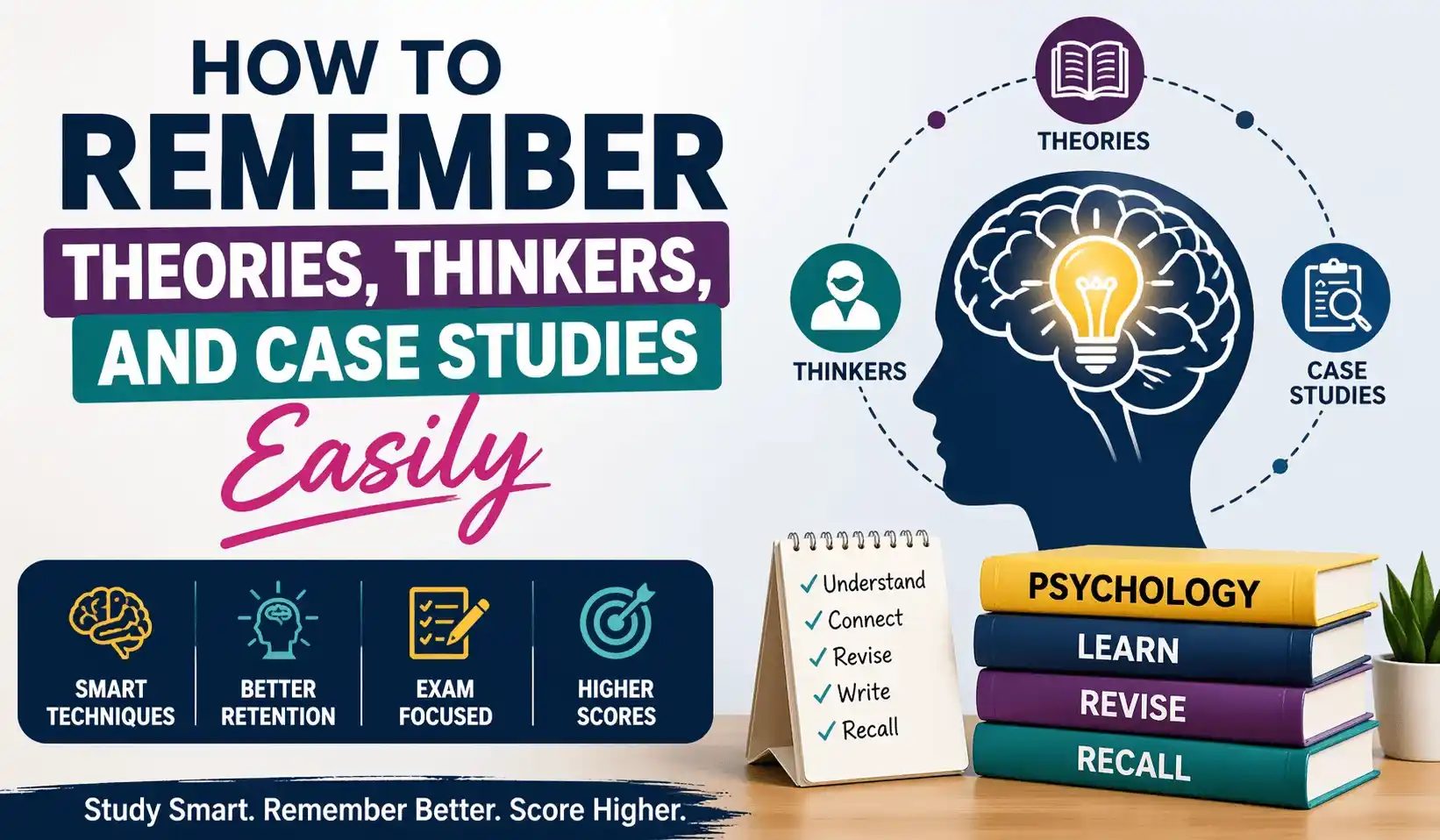
👉 Understand → Link → Revise → Write → Recall
Steps:
- Grasp the concept
- Connect it with real-life examples
- Revise it several times
- Practice writing it out
- Actively recall the information
📌 Common Pitfalls to Steer Clear Of
- ❌ Memorizing without truly understanding
- ❌ Skipping revision
- ❌ Neglecting to practice your answers
- ❌ Overloading yourself with too much information
FAQ Section
1. How can I remember theories and thinkers easily?
Use mnemonics, active recall, and spaced repetition. Link theories with real-life examples and revise regularly to improve retention.
2. What is the fastest way to memorize case studies?
Break case studies into key points and use keywords. Practice writing answers to reinforce memory quickly.
3. How to avoid forgetting theories during exams?
Revise multiple times using spaced repetition and practice active recall. Writing answers improves memory retention.
4. Are mind maps useful for remembering psychology theories?
Yes, mind maps help visualize connections between concepts, making it easier to recall information during exams.
5. How important is revision for remembering theories?
Revision is crucial. Without repeated revision, information is quickly forgotten due to the forgetting curve.
🎯 Final Conclusion
To remember theories, thinkers, and case studies easily, you need a strategic approach—not just hard work. Use active recall, spaced repetition, mnemonics, and answer writing consistently.