What’s the Difference Between Stress and Anxiety?
Getting a grip on the difference between stress and anxiety is crucial for taking care of your mental health. While they might feel quite similar, they’re actually not the same thing. This guide breaks down their definitions, symptoms, causes, and the key differences in a straightforward, SEO-friendly way.
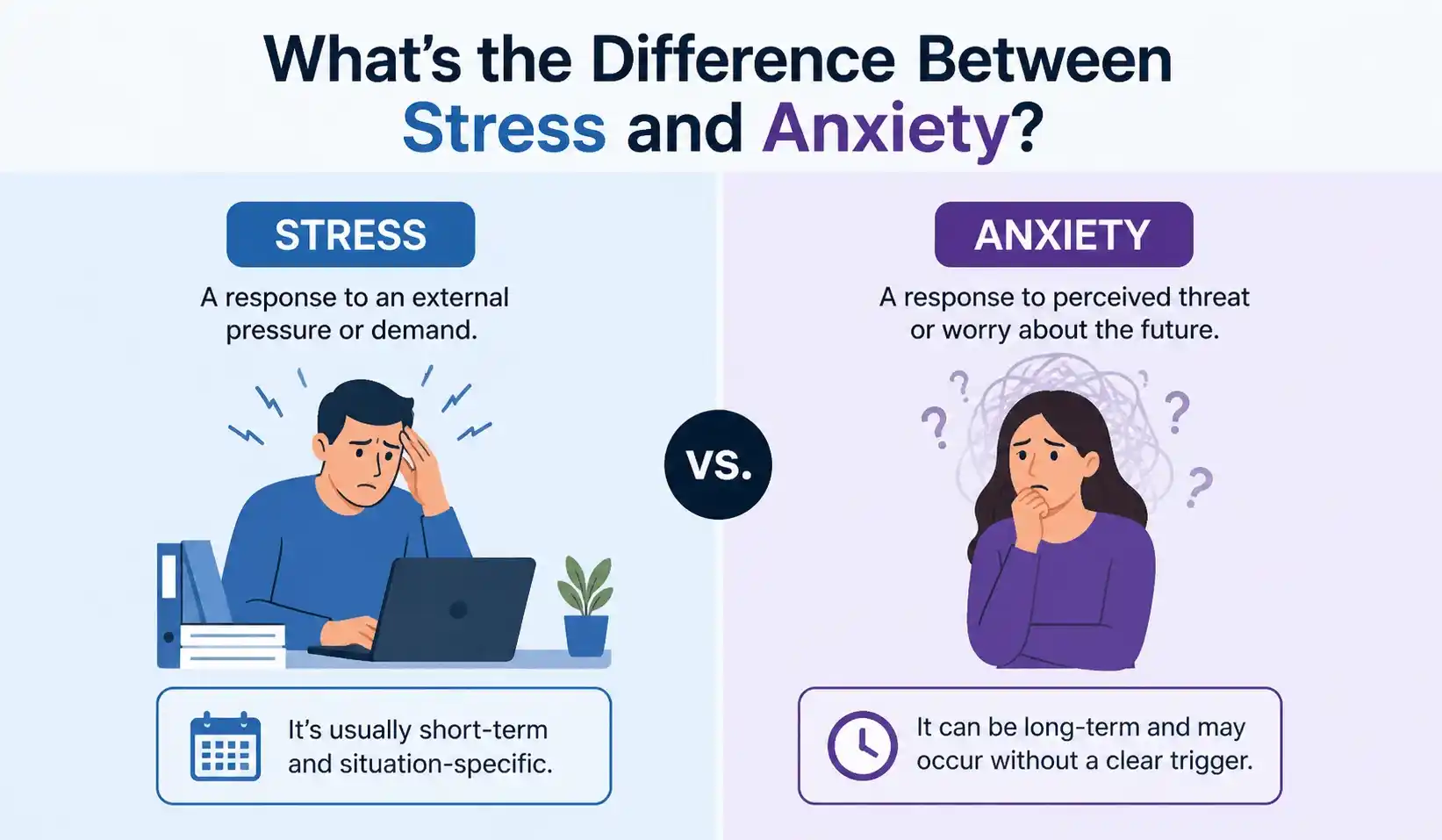
Stress is your body’s reaction to an outside pressure or demand, like work deadlines or exams, and it usually fades away once the situation is resolved.
Anxiety, on the other hand, is a lingering feeling of worry or fear that doesn’t always have a clear cause and can stick around even when there’s no immediate stressor.
📌 What is Stress?
Stress is your body’s natural response to challenges or demands. It’s typically triggered by external factors such as deadlines, financial troubles, or conflicts.
Key Features of Stress
- Triggered by a specific situation
- Short-term and temporary
- Disappears when the stressor is gone
- Can be either positive (motivating) or negative
👉 Example: Feeling the pressure before an exam or job interview.
Read more: understanding depression causes symptoms and treatment
📌 What is Anxiety?
Anxiety is that nagging feeling of excessive worry, fear, or uneasiness. Unlike stress, it often pops up without a clear external cause and can stick around for a long time.
Key Features of Anxiety
- Often internal and vague
- Long-lasting or chronic
- Can happen without a trigger
- May disrupt daily life
👉 Example: Constantly worrying about future events without a clear reason.
⚖️ Difference Between Stress and Anxiety
| Feature | Stress | Anxiety |
| Cause | External (work, exams, pressure) | Internal (thoughts, fears) |
| Duration | Short-term | Long-term or chronic |
| Trigger | Clear and identifiable | Often unclear or absent |
| Intensity | Mild to moderate | Can be intense and overwhelming |
| Resolution | Ends when stressor is removed | May persist without treatment |
| Impact | Temporary discomfort | Can affect mental health significantly |
🧠 Stress vs Anxiety Symptoms
Common Symptoms of Stress
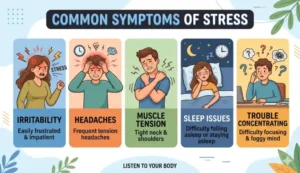
- Irritability
- Headaches
- Muscle tension
- Sleep issues
- Trouble concentrating
Common Symptoms of Anxiety
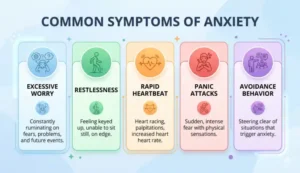
- Excessive worry
- Restlessness
- Rapid heartbeat
- Panic attacks
- Avoidance behavior
Don’t just read take action.
Download our app and begin managing stress and anxiety with real, practical solutions.
People Also Ask
1.Why Do Stress and Anxiety Feel Similar?
Have you ever wondered why stress and anxiety can feel so alike? Well, it’s because both trigger our body’s fight-or-flight response. This reaction brings on physical symptoms like a racing heart and muscle tension. The key difference is that stress usually relates to a specific situation, while anxiety tends to linger and can pop up even when there’s no clear reason behind it.
1. Can Stress Turn Into Anxiety?
Now, can stress actually turn into anxiety? Absolutely! If stress sticks around for too long without being managed, it can morph into anxiety. When your body is constantly on high alert, it can lead to ongoing worry, which is a hallmark of anxiety disorders.
2. Which is Worse: Stress or Anxiety?
So, which is worse: stress or anxiety? The truth is, both can be detrimental if they last too long. Short bursts of stress can be manageable and even beneficial, but when stress and anxiety become chronic, they can take a toll on your mental and physical well-being, potentially leading to issues like depression, sleep problems, and a weakened immune system.
3. How to Tell If It’s Stress or Anxiety?
How can you tell if what you’re feeling is stress or anxiety? If your symptoms are tied to a specific event and ease up once that situation is over, you’re likely dealing with stress. On the other hand, if your worries are constant, overwhelming, and don’t seem to have a clear cause, it’s more likely that you’re experiencing anxiety.
Curious to learn how psychologists actually manage stress and anxiety in real clients?
Gain hands-on experience with our Counselling Psychology Internship designed for practical skills, case understanding, and real exposure.
🛠️ How to Manage Stress and Anxiety
Effective Stress Management Tips
- Get your time management and planning on point
- Make regular exercise a part of your routine
- Try out relaxation techniques like deep breathing and meditation
- Don’t forget to take breaks when you need them
Effective Anxiety Management Tips
- Consider Cognitive Behavioral Therapy (CBT)
- Incorporate mindfulness practices into your day
- Keep an eye on your caffeine intake
- Don’t hesitate to seek professional help if you feel it’s necessary
📊 Key Differences Between Stress and Anxiety
- Stress comes from external sources, while anxiety is more about what’s happening inside
- Stress tends to be temporary, but anxiety can stick around
- Stress usually has a clear trigger, whereas anxiety might not
- Stress can actually motivate you, but anxiety often feels overwhelming
📝 Conclusion
Grasping the differences between stress and anxiety is crucial for spotting symptoms early and picking the right coping strategies. While stress is often a short-lived response to a situation, anxiety can be more persistent and might need professional support.
By understanding these distinctions, you can take charge of your mental well-being and enhance your overall quality of life.