Counselling Psychology Internship Skills: Practical Learning Beyond Textbooks
A Counselling Psychology Internship plays a crucial role in shaping future mental health professionals. While academic education provides theoretical understanding of human behaviour, core counselling abilities develop only through practical experience. A structured Counselling Psychology Internship Program allows students to work in real counselling environments, observe professionals, and interact with clients under supervision.
With the increasing global awareness of mental health concerns, the demand for trained and ethically grounded counsellors continues to grow. Developing strong counselling psychology internship skills allows students to effectively bridge the gap between theoretical knowledge and applied professional practice.
Importance of a Counselling Psychology Internship
Many psychology students possess theoretical knowledge yet may feel unprepared when encountering real clients for the first time. A Mental Health Counselling Internship helps students gain confidence by exposing them to real-life emotional and psychological situations.
Through structured Counselling Psychology Training, interns learn how counselling sessions are conducted, therapeutic communication, case conceptualization, and professional management of emotional conflict.Such experiential learning fosters clinical competence that cannot be fully developed through academic study alone.
Internships also teach workplace discipline, ethical responsibility, and professional boundaries — all of which are essential for a successful counselling career.
Key Skills Developed During a Counselling Psychology Internship
-
Active Listening and Deep Understanding
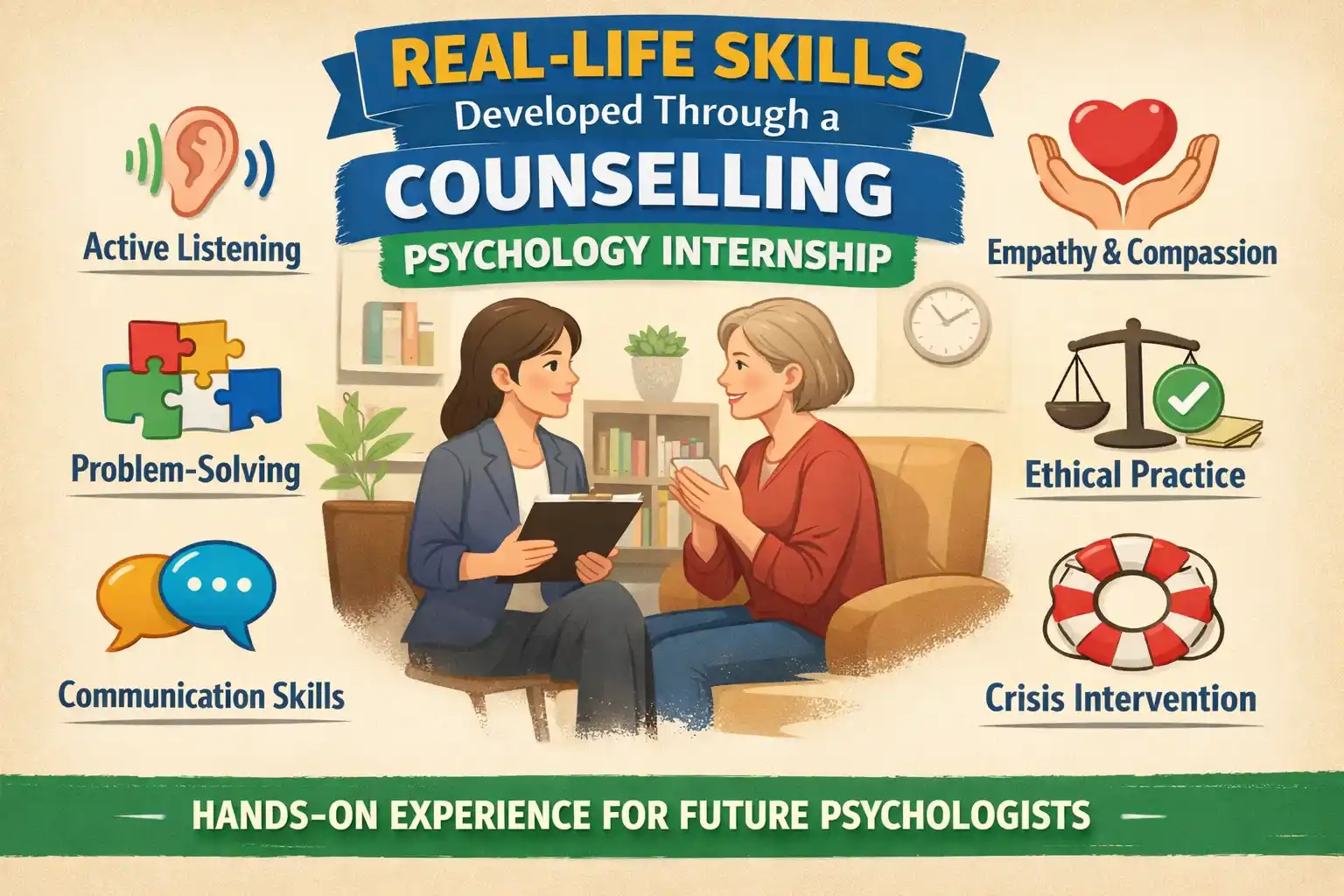
One of the most essential Psychology Internship Skills is active listening. Counsellors must listen attentively and non-judgmentally, allowing clients to express themselves freely .Interns learn to observe verbal and non-verbal cues, including tone of voice, affect, posture, and body language. This enhances their ability to understand clients holistically and respond appropriately.
Start your journey in professional psychology today.
Learn from experts and gain practical experience in mental health.
Join Confidante Psychology Academy and build your psychology career.
-
Communication and Rapport Building
Effective communication is the foundation of counselling. Through Counselling Psychology Practical Training, interns learn to formulate open-ended questions,respond empathetically, and create a safe environment where clients feel comfortable sharing their concerns.
Building trust with clients is one of the most valuable abilities developed during internship training.
-
Emotional Intelligence and Empathy
Internships help students develop emotional awareness and empathy. Understanding a client’s emotions while maintaining professional balance is an important counselling skill.
These Skills Gained from Counselling Psychology Internship allow future counsellors to support clients compassionately without becoming emotionally overwhelmed.
Case Observation and Analytical Thinking
During a Counselling Psychology Internship Program, interns observe counselling sessions, review case histories, and analyze behavioral and cognitive patterns. They gain practical experience in maintaining session notes, identifying presenting concerns, and understanding therapeutic interventions..
This improves analytical thinking and problem-solving abilities, which are essential in counselling practice.
1.Ethical and Professional Practice
Ethics are a core part of counselling psychology. Through structured Counselling Psychology Training, interns develop an understanding of confidentiality, informed consent, professional conduct, and responsible client management.
Understanding ethical guidelines ensures both client safety and professional credibility.
2.Exposure to Therapy Techniques
A Mental Health Counselling Internship introduces students to different counselling approaches used by professionals. Interns may observe techniques such as cognitive behavioural strategies, emotional support counselling, and stress management practices.
This exposure helps students understand how psychological theories are applied in real situations.
3.Confidence and Professional Development
At the beginning of their internship, many students experience anxiety or self-doubt when interacting with clients. However, consistent supervised practice gradually enhances their confidence and professional competence.
By developing strong Psychology Internship Skills, interns become more comfortable communicating, handling emotional conversations, and managing counselling responsibilities.
Enjoyed this article on counselling psychology internships?
Explore more insights, career tips, and psychology knowledge.
Read our next blog On Skills Required to Become a Counselling Psychologist
Career Benefits of Counselling Psychology Practical Training
Completing a Counselling Psychology Internship significantly improves career opportunities. Employers prefer candidates who already have practical exposure and understand counselling environments.
After internship completion, students can explore roles such as:
- Assistant Counselling Psychologist
- School or College Counsellor
- Mental Health Support Worker
- Rehabilitation Counsellor
- Wellness or Emotional Support Coach
- NGO Mental Health Professional
Practical training strengthens resumes and prepares students for real-world mental health practice.
Real-Life Exposure Creates Professional Growth
One of the most significant advantage of a counselling internship is exposure to real-world clinical and community settings. Students learn to handle diverse populations, manage complex, emotional situations, and unexpected challenges. This experience builds patience, adaptability, and professional maturity.
The Skills Gained from Counselling Psychology Internship go beyond academic knowledge and help students develop a deeper understanding of human emotions and behaviour.
Conclusion
A Counselling Psychology Internship is more than an academic requirement — it is a transformative experience that prepares students for real counselling careers. Through structured Counselling Psychology Practical Training, interns develop communication skills, empathy, ethical awareness, analytical thinking, and professional confidence.
Strong Counselling Psychology Internship Skills enable aspiring counsellors to provide meaningful mental health support and build successful careers in psychology. For individuals pursuing careers in counselling psychology, internship experience serves as the foundation that transforms theoretical knowledge into applied clinical expertise.
FAQ
1.What skills are developed during a counselling psychology internship?
Students develop listening skills, communication abilities, empathy, case analysis, ethical understanding, and professional counselling confidence.
2.Why is a counselling psychology internship important?
It provides practical exposure and helps students apply psychological theories in real counselling settings.
3.Who is eligible to apply for a counselling psychology internship program?
Psychology students, graduates, and individuals interested in mental health careers can apply.
4.Does counselling psychology training improve job opportunities?
Yes, internship experience increases employability by demonstrating practical competence and preparedness for roles in schools, clinics, and mental health organizations.
5.What is the typical duration of a mental health counselling internship?
Most internships range from one to six months depending on the training institute and program structure.