Introduction
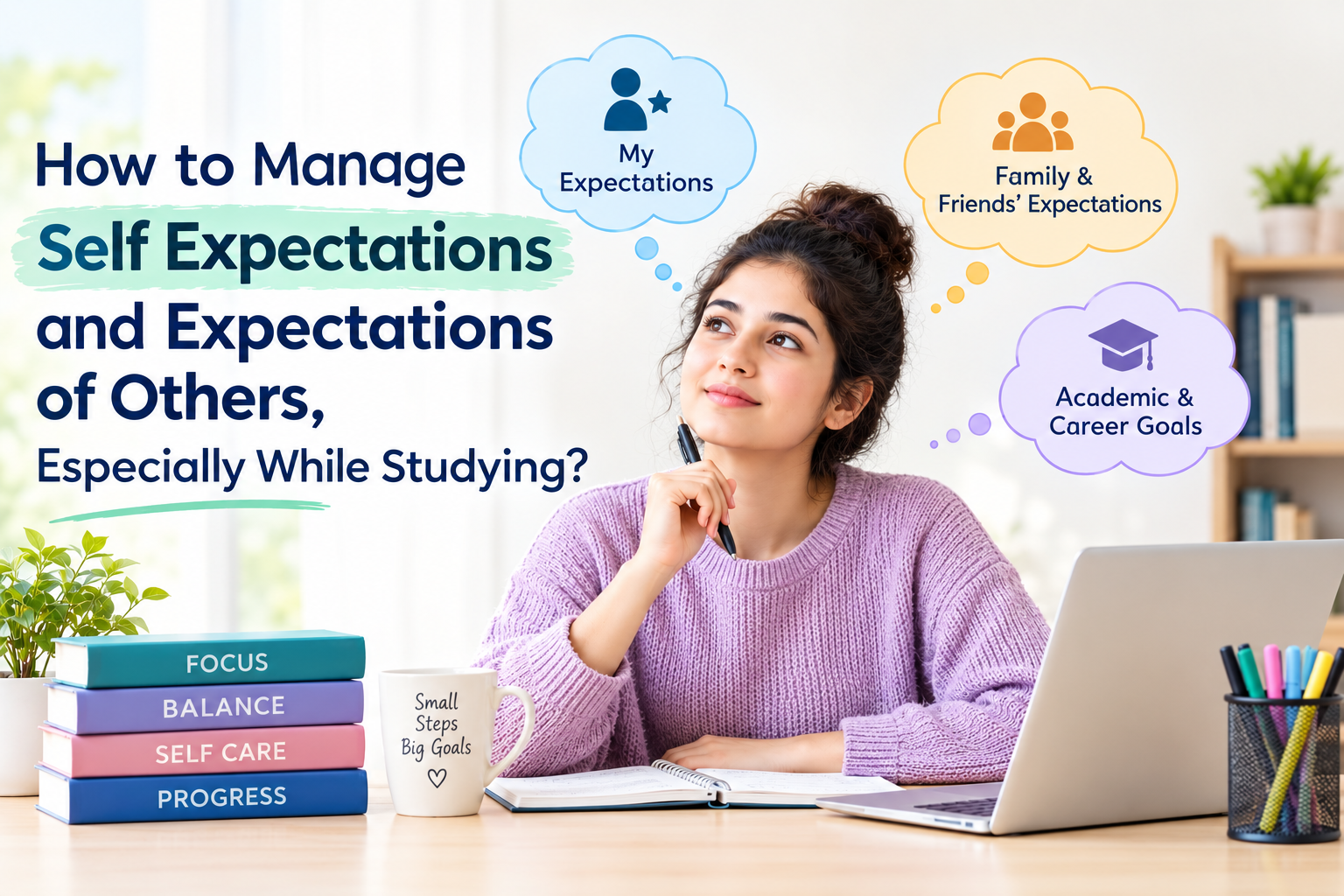
Navigating expectations while studying can be one of the toughest psychological challenges students encounter today. Whether it’s the weight of goals you set for yourself or the pressures coming from parents, teachers, and friends, managing these expectations plays a crucial role in both your academic performance and mental health. This detailed guide will help you find a balance between your own expectations and those of others, all while keeping your focus on your studies.
What Is Expectation Management in an Academic Context?
Expectation management is all about setting realistic and achievable goals for yourself while also considering the hopes and concerns of those around you.
It’s about finding a way to align your internal motivation with external pressures without sacrificing your mental well-being or academic success. It’s important to note that expectation management doesn’t mean lowering your standards; rather, it’s about creating a sustainable and realistic framework that encourages you to move forward without leading to burnout.
Want to understand psychology beyond textbooks? Explore our Complete Psychology Master Course for structured, student-friendly learning in psychology.
Why Do Expectations Create Pressure While Studying?
When expectations are left unmanaged, they can lead to cognitive and emotional stress, which can significantly hinder your study efficiency. If you’re constantly anxious about meeting these expectations, the part of your brain responsible for learning and memory the prefrontal cortex becomes less active, while the amygdala, which is linked to fear, kicks into overdrive. This physiological reaction helps explain why high-pressure study environments often result in lower grades, even when you’re putting in more hours of study.
Types of Expectations: Understanding the Sources of Pressure
Self-Imposed Expectations
Self-expectations are the standards you set for yourself.
Here are a few examples:
- “I have to score 90% or higher.”
- “I should study for 6 hours every day.”
- “I need to complete the entire syllabus by the end of the month.”
Challenge: The problem with self-imposed expectations is that they can often become unrealistically high due to perfectionism.
Parental Expectations
It’s not uncommon for parents to project their dreams onto their kids.
Here are a few typical situations:
- The push to follow certain career paths
- Being compared to siblings or friends
- The insistence on achieving top grades, no matter the effort put in
Challenge: The expectations set by parents might not match your own skills or passions.
Peer and Social Expectations
Peer pressure can lead to anxiety rooted in comparison:
- “Everyone else did better; I’m really falling behind.”
- “My friend got into [prestigious university]; I should be able to too.”
- “I need to join all the extracurriculars like everyone else.”
Challenge: This kind of social comparison can spark self-doubt and lead to setting unrealistic goals.
Take your psychology learning beyond textbooks. Explore Confidante Psychology Academy for online psychology courses, practical learning, exam preparation, and skill-based psychology programs designed for students and aspiring psychology professionals.
Expert Insight: Dr. Aarti Kandolkar on Managing Expectations in Learning
Dr. Aarti Kandolkar, a well-respected psychology educator and the founder of Confidante Psychology Academy, focuses on helping students deal with the stress that comes from expectations.
“Most students struggle not due to a lack of ability, but because they feel overwhelmed by unrealistic expectations,” Dr. Kandolkar shares. “The psychology behind expectations is truly intriguing our brains actually function differently depending on the weight of those expectations.”
Practical Strategies for Managing Expectations While Studying
1. Set SMART Goals Instead of Vague Ambitions
- Specific: Aim for “Score 75% in Psychology” rather than just “do well.”
- Measurable: Keep track of your progress with mock tests.
- Achievable: Make sure your goals are realistic based on your current level and the time you can dedicate to studying.
- Relevant: Ensure your goals align with your career aspirations.
- Time-bound: Set a clear deadline for when you want to achieve these goals.
2. Practice Expectation Reframing
When you feel overwhelmed by expectations, try to reframe them:
- Original: “I must score 95% or I’m a failure.”
- Reframed: “I’ll give it my all with the resources I have; improving by 70% from my baseline is a success.”
3. Create Expectation Agreements with Others
- Have open discussions about realistic goals with your parents or teachers.
- Write down the agreed-upon expectations.
- Check in on your progress together every month.
- Be ready to adjust expectations based on how you’re actually performing.
4. Develop Self-Compassion Practices
- Focus on the effort you put in rather than just the outcome.
- Use positive self-talk instead of being hard on yourself.
- Incorporate mindfulness practices to help ease anxiety.
- Celebrate your progress, no matter how small, instead of striving for perfection.
5. Establish Boundary-Setting Skills
- Learn to say “no” to demands that are too much to handle.
- Clearly communicate your limits to others.
- Protect your study time from unnecessary distractions.
- Remember to prioritize your mental health just as much as your academic success.
Managing Expectations: Action Plan
Week 1
Take some time to pinpoint all the expectations you have—whether they come from yourself, your parents, your friends, or your school.
Week 2
Sort these expectations into two categories: realistic and unrealistic, using the SMART criteria as your guide.
Week 3
Share any necessary adjustments with the people who need to know.
Week 4
Keep an eye on your stress levels and how you’re doing academically.
Weeks 5+
Make changes based on what you actually experience and how you’re feeling mentally.
FAQ: Expectation Management Questions
Q.1: Is it okay to have no expectations for myself?
A: Not really. Having some expectations can drive your growth. The trick is to make sure they’re realistic, adaptable, and in line with your values rather than being perfectionist or based on comparisons with others.
Q.2 : How do I deal with my parents’ unrealistic expectations?
A: Keep track of your genuine efforts and abilities with some solid data. Suggest more realistic alternatives together. It might help to get support from teachers or counselors to back up what’s reasonable. Remember, it’s about making progress, not achieving perfection.
Q.3 : Can managing expectations really boost my study performance?
A: Definitely! Lowering anxiety can enhance your focus, help with memory retention, and improve your problem-solving skills.
Q.4 : What if I still fail even after managing my expectations?
A: Think of failure as just information, not a reflection of who you are.
Take a moment to figure out what went wrong, tweak your approach, and give it another shot. Realistic expectations should include the chance of setbacks—that’s part of growing, not failing.
Conclusion
Navigating your own expectations and those of others while studying isn’t a sign of weakness it’s a mark of psychological intelligence. By setting achievable goals, communicating your limits, and being kind to yourself, you can turn expectations from burdens into stepping stones for lasting success. Keep in mind: The aim isn’t to be perfect; it’s to make progress while taking care of your well-being.