Introduction
When it comes to learning, both free YouTube content vs paid online courses offer their own unique advantages. YouTube is a treasure trove of educational videos available at no cost, while paid courses typically come with a well-organized curriculum, valuable resources, assessments, and sometimes even expert guidance to help you along the way.
So, which option is better: YouTube or paid online courses? The answer really hinges on your learning goals, budget, the subject matter, the time you have available, and how much guidance you need. YouTube can be fantastic for diving into a topic or brushing up on concepts, while paid courses often shine when it comes to systematic learning, exam prep, and skill development.
At Confidante Psychology Academy, led by Dr. Arti Kandolkar, the focus is on psychology education, mentoring, hands-on learning, and preparing for competitive exams. If you’re keen on structured psychology courses, this is a great place to start.
What Is the Difference Between YouTube Content and Paid Online Courses?
Learning through YouTube means tapping into a wealth of free videos, lectures, tutorials, and demonstrations to grasp a subject. It offers flexibility and a wide range of content, but the quality and organization can vary quite a bit.
On the other hand, paid online courses are structured learning experiences that typically follow a set curriculum. They often include recorded or live classes, comprehensive notes, assignments, quizzes, assessments, certificates, community support, and guidance from instructors.
Is YouTube Better Than Paid Online Courses?
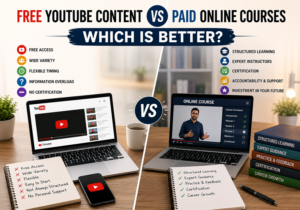
There’s no clear-cut answer here; neither option is inherently better. YouTube excels for free exploration, quick explanations, last-minute revisions, and getting a taste of a new subject. In contrast, paid online courses are usually the way to go when learners seek structured lessons, assessments, mentorship, hands-on activities, or a complete learning journey.
Ultimately, the best choice depends on the outcomes you’re aiming for, rather than just whether the resource is free or paid.
Advantages of Free YouTube Content
YouTube has really become a go-to place for free educational content. Students can easily access lectures, explanations of concepts, revision videos, interviews, demonstrations, and tutorials on specific subjects all without having to pay any course fees.
So, why should you consider YouTube for your learning journey?
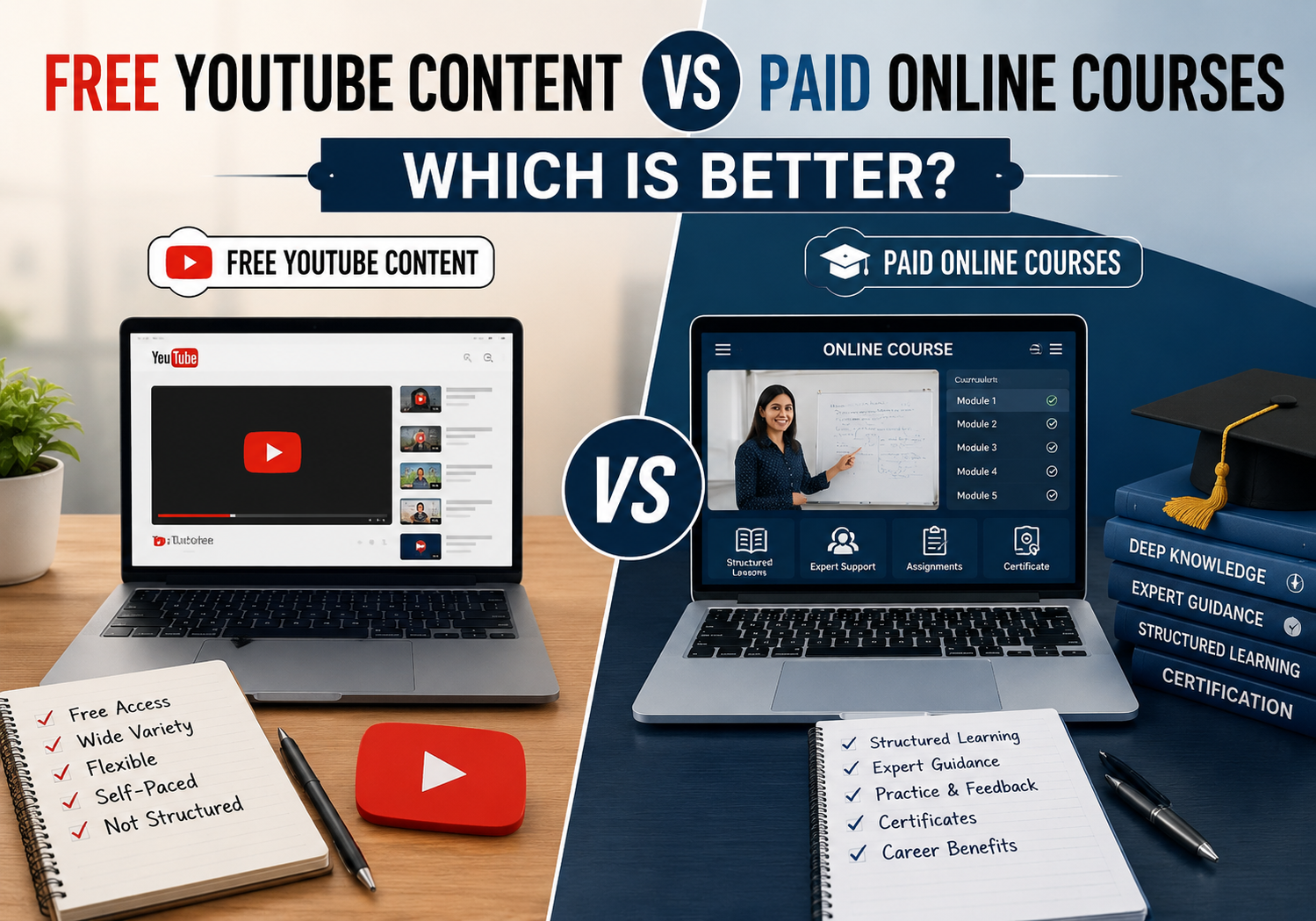
- Free access: Most educational videos are available to watch without needing to buy a course.
- Wide variety: You can check out different teachers and their unique explanations.
- Flexible learning: You have the freedom to pause, replay, skip, or revisit lessons whenever you want.
- Quick answers: It’s super handy when you just need help with a specific concept.
- Low financial risk: You can dive into a subject without spending any money upfront.
However, one downside is that learning can feel a bit scattered. Watching unrelated videos might give you bits of information, but it won’t necessarily provide a complete syllabus or a logical flow.
Enjoyed this article? Continue your learning by reading our other informative blogs on psychology, education, and career opportunities. Psychology Career Guide in India 2026: Courses, Salary & Job Opportunities
Now, let’s talk about the perks of paid online courses.
Typically, a paid course is designed with a specific learning goal in mind. Instead of hunting for individual videos, students can follow a structured path laid out by the course creator.
Why do students opt for paid courses?
- Structured curriculum: Topics are organized in a logical order.
- Focused learning: The content is tailored to achieve specific outcomes.
- Learning resources: You might get notes, workbooks, quizzes, and assignments included.
- Accountability: Having a set course schedule can help keep you on track.
- Expert guidance: Some courses offer feedback, mentoring, or support for learners.
- Certification: Certain programs provide certificates upon completion.
For those preparing for competitive exams or looking to develop professional skills, having that structure can be especially beneficial.
Are Paid Online Courses Worth It?
Paid online courses can definitely be worth the investment if they help you save time, offer a comprehensive curriculum, provide high-quality resources, and come with practical support. However, they might not be the best choice if the same information is readily available for free without any significant added structure, practice, or guidance.
Before you make a purchase, take a moment to review the syllabus, check the instructor’s credentials, look at sample lessons, read reviews, and understand the assessments, support system, updates, and refund policy.
Ready to Master Psychology?
Move beyond scattered YouTube videos and learn psychology through a structured, comprehensive course designed to help you understand concepts, strengthen your knowledge, and prepare with confidence.
👉 Join Our Psychology Master Course Today
Can You Learn Everything From YouTube?
You can learn a ton from YouTube, especially when it comes to foundational concepts, demonstrations, and revision topics. But trying to learn an entire subject solely through YouTube can get tricky, especially when you need progressive lessons, regular assessments, detailed feedback, or specialized training. The real challenge often lies not in accessing information but in organizing and applying it effectively.
Which Is Better for Students?
For many students, the ideal approach is to blend YouTube with paid online courses.
Use YouTube to:
- Explore new topics.
- Grasp challenging concepts.
- Revise lessons.
- Compare different teaching styles.
- Find quick explanations.
Turn to paid courses when you need:
- A complete syllabus.
- A structured study plan.
- Assignments and tests.
- Mentorship.
- Exam-focused preparation.
- Practical skill development.
Current online education options show that learners can choose from free courses, paid programs, and certificate-based options, making it essential to consider curriculum and learning outcomes when comparing courses.
How Should You Choose an Online Course?
Before you buy an online course, ask yourself:
- Does the syllabus align with my specific goals?
- Is the instructor qualified and experienced?
- Is the curriculum organized in a logical way?
- Are there assignments, quizzes, or practical activities included?
- Is there support available for learners or mentors?
- Does the certificate hold value for my intended purpose?
- Are sample lessons accessible?
- Is the content regularly updated?
Do not choose a course simply because it is expensive. Value comes from the quality, structure, relevance, support, and outcome of the learning experience.
Frequently Asked Questions
Is YouTube good for learning?
Yes. YouTube is useful for introductory learning, concept clarification, revision, demonstrations, and exploring different teaching methods. However, learners should verify information and organise useful videos into a clear study plan.
Are paid online courses better than YouTube?
Not necessarily. Paid courses generally offer greater structure, while YouTube provides free and flexible access. The better option depends on your learning objective, subject complexity, budget, study discipline, and need for mentorship or assessment.
Should I buy an online course or learn from YouTube?
Start with YouTube if you are exploring a subject or need basic explanations. Consider a paid course when you need a complete syllabus, systematic progression, assignments, feedback, mentoring, or exam-focused preparation.
Are paid online courses worth paying for?
They can be worthwhile when they provide expert instruction, structured content, practical exercises, feedback, updated resources, and learner support. Always compare the course curriculum and outcomes before purchasing.
Can YouTube replace an online course?
For some goals, yes. YouTube can be enough for basic knowledge and revision. However, structured courses can be more useful when learners require sequential lessons, assessments, personalised feedback, accountability, or specialised training.
Final Takeaway
When it comes to the debate between free YouTube content and paid online courses, it’s not just a matter of free versus pricey. It’s really about the structure, quality, guidance, practice, and your specific learning goals.
Opt for YouTube if you’re looking to explore, enjoy flexibility, need quick explanations, or want to revise topics. On the other hand, go for a paid online course when you’re after a more systematic approach to learning, expert guidance, assessments, practical skills, or a clear study roadmap.
For those serious about academic and professional growth, the best choice is the resource that offers a solid mix of credible instruction, well-structured content, hands-on learning, assessments, and support.