
The Importance of Early Intervention in Mental Health: Why It Matters
Early intervention in mental health involves identifying issues early on and putting the right support or treatment in place. This proactive approach can stop symptoms from escalating and lead to better recovery outcomes.
Mental health challenges like stress, anxiety, and depression are on the rise globally. When these issues are identified early, individuals can access the care they need before they become severe.
Recognizing the significance of early intervention in mental health empowers individuals, families, schools, and workplaces to promote mental well-being more effectively.
Learn more about our approach to mental health at Confidante Psychology Academy
What Is Early Intervention in Mental Health?
Early intervention in mental health means identifying the initial signs of mental health conditions and providing timely treatment, therapy, or support.
The goal is to prevent these conditions from worsening and to enhance long-term well-being.
Key components of early mental health intervention include:
– Spotting early warning signs
– Seeking professional mental health support
– Offering counselling or therapy
– Promoting healthy coping strategies
– Keeping an eye on emotional and psychological changes
Taking action early boosts the chances of successful treatment and lowers the risk of long-term mental health issues.
Why Is Early Intervention in Mental Health Important?
The significance of early intervention in mental health lies in its power to prevent minor issues from evolving into serious disorders.
When people get support early, they can manage their emotions more effectively and avoid severe mental health complications.
Here are some key reasons why early intervention is crucial:
– Stops mental health conditions from getting worse
– Boosts recovery rates
– Alleviates emotional suffering
– Enhances overall quality of life
– Improves relationships and social interactions
– Cuts down on long-term healthcare costs
Getting early support can make a world of difference in both personal and professional lives.
Explore more: Understanding Depression: Causes, Symptoms, and Treatment
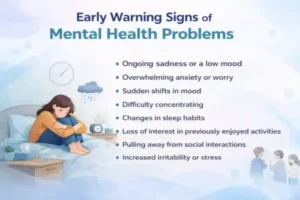
Early Warning Signs of Mental Health Problems
Spotting early signs is crucial for understanding the importance of timely intervention in mental health.
Here are some common warning signs to look out for:
– Ongoing sadness or a low mood
– Overwhelming anxiety or worry
– Sudden shifts in mood
– Difficulty concentrating
– Changes in sleep habits
– Loss of interest in previously enjoyed activities
– Pulling away from social interactions
– Increased irritability or stress
If these signs persist for several weeks, it is advisable to seek professional mental health support.
Benefits of Early Intervention in Mental Health
The significance of early intervention in mental health becomes evident when we consider its benefits.
1. Quicker Recovery
Early treatment allows mental health professionals to address symptoms before they escalate, increasing the chances of a swift and effective recovery.
2. Preventing Severe Mental Disorders
Addressing mental health issues early can prevent mild anxiety or stress from developing into serious depression or other disorders.
3. Enhanced Emotional Well-Being
Individuals develop coping skills that help them manage stress and emotional challenges more effectively.
4.Better Productivity and Focus
Maintaining good mental health enhances concentration, creativity, and decision-making abilities.
5. Lower Healthcare Costs
Treating mental health conditions early is often more cost-effective than dealing with long-term untreated issues.
How Early Intervention Supports Long-Term Mental Wellness
Early intervention fosters emotional resilience and psychological stability.
Some key long-term benefits include:
– Stronger coping mechanisms
– Improved emotional regulation
– Lower risk of chronic mental illness
– Healthier social relationships
– Greater life satisfaction
These advantages highlight why early mental health support is vital for long-term well-being.
What Strategies Support Early Mental Health Intervention?
Several effective strategies can significantly enhance early intervention in mental health.
Some of the key approaches include:
– Mental health awareness programs
– School counselling services
– Workplace mental health initiatives
– Use of online therapy platforms
– Regular psychological assessments
– Stress management programs
Increasing awareness and improving access to resources can enhance the effectiveness of early intervention.
Role of Family, Schools, and Communities
To provide early mental health support, families, schools, and communities need to work together.
Families
Families can play a crucial role in early intervention by:
– Encouraging open communication
– Monitoring emotional changes
– Seeking professional help when necessary
Schools
Schools play a vital role in this effort by:
– Offering mental health education
– Providing student counselling programs
– Training teachers to spot early warning signs
Communities
Communities can contribute by:
– Promoting mental health awareness
– Reducing the stigma surrounding therapy
– Improving access to mental health resources
These collective efforts highlight the significance of early intervention in mental health throughout society.
Start your journey in psychology with our UPSC/MPSC Psychology Optional program today.
Frequently Asked Questions (FAQs)
1.What is early intervention in mental health?
Early intervention in mental health refers to the process of identifying mental health issues at an early stage and providing timely treatment or support. This proactive approach helps prevent symptoms from escalating and leads to better recovery outcomes.
2. Why is early intervention important for mental health?
Early intervention is crucial because it helps prevent the development of severe mental health disorders, improve recovery rates,reduces emotional distress, and enhance overall well-being. By addressing symptoms early on, individuals can receive the support they need before issues become more serious.
3. What are the early signs of mental health problems?
Early signs of mental health problems include ongoing sadness, anxiety, mood swings, difficulty concentrating, changes in sleep patterns, withdrawal from social activities, and loss of interest in previously enjoyed activities. Identifying these symptoms early can help individuals seek professional support without delay.
4. How does early intervention improve mental health recovery?
Early intervention improves recovery by addressing symptoms before they escalate. Timely therapy, counselling, and lifestyle adjustments can help individuals manage stress effectively and reduce the risk of long-term mental health challenges.
5. Can early intervention prevent severe mental illness?
Yes, early mental health intervention can prevent many conditions from worsening. With appropriate counselling, therapy, and emotional support, the risk of developing chronic mental illnesses such as severe depression or anxiety disorders can be significantly reduced.
Conclusion
The importance of early intervention in mental health cannot be overlooked.Spotting symptoms early and seeking help promptly not only boosts recovery but also helps prevent severe mental illness and improves overall quality of life.
When individuals, families, schools, and communities prioritize mental health awareness , they foster a supportive environment that encourages people to seek help sooner.