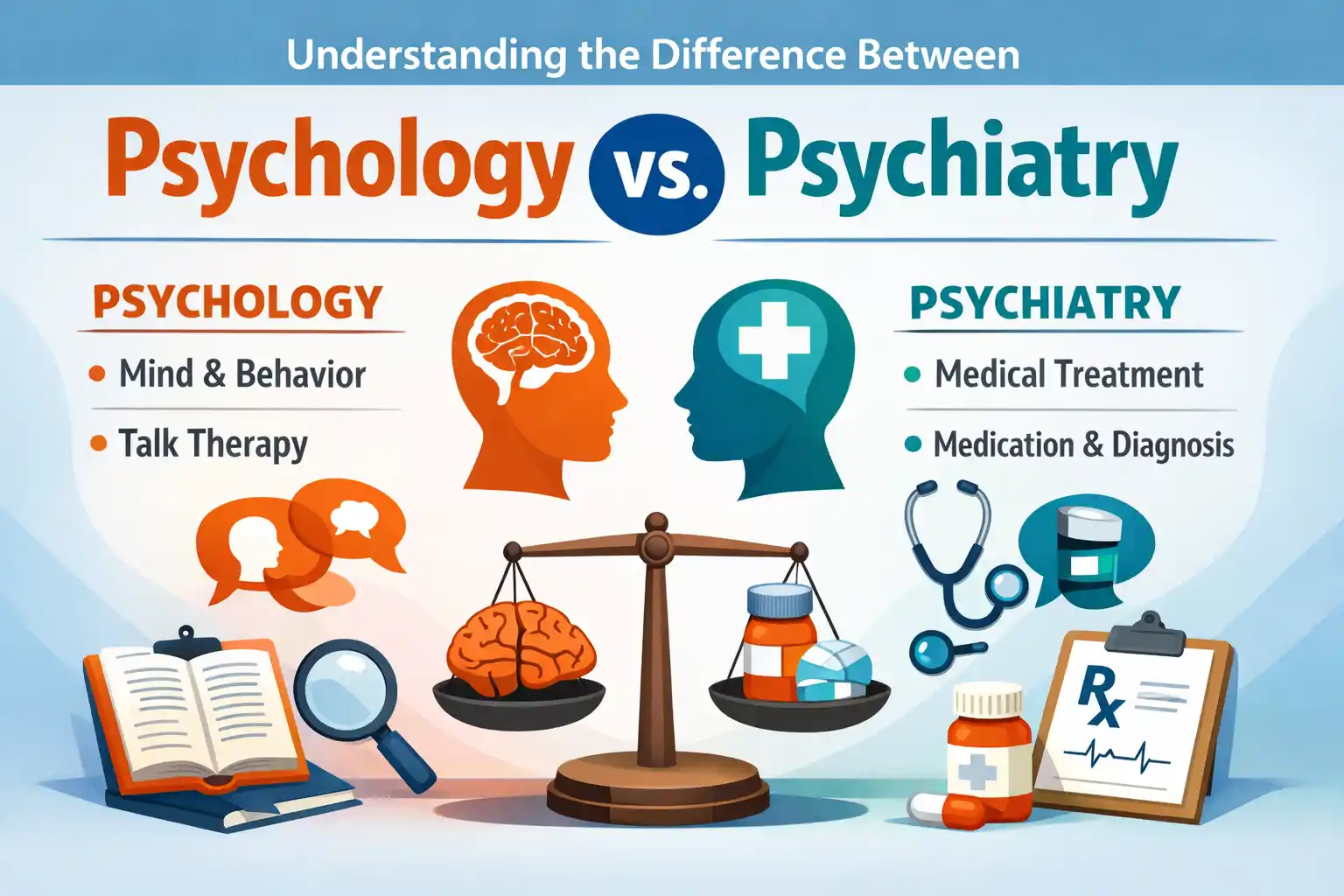
Understanding the difference between psychology and psychiatry is crucial for anyone looking into mental health care. While both areas concentrate on mental well-being, they vary in terms of training, treatment methods, and what they cover. Recognizing these differences can guide individuals in selecting the right professional for therapy, counseling, or medical assistance.
What is Psychology?
Psychology is all about the scientific exploration of the human mind, behavior, and emotions. Psychologists aim to understand thoughts, feelings, and actions to enhance mental health.
Key points:
- Takes a non-medical approach to mental health
- Utilizes counseling, therapy, and behavioral strategies
- Usually requires a master’s or doctoral degree in psychology
- Generally cannot prescribe medications (with some exceptions in certain U.S. states after additional training)
What is Psychiatry?
Psychiatry is a branch of medicine that focuses on mental disorders. Psychiatrists are medical doctors who diagnose, treat, and work to prevent mental illnesses, often combining medication with therapy.
Key points:
- Employs a medical approach to mental health
- Has the authority to prescribe medications
- Requires an MD/MBBS with a specialization in psychiatry
- Examines biological, neurological, and psychological factors
Who Should See a Psychologist vs. a Psychiatrist?
- Psychologist: Ideal for those seeking counseling, cognitive-behavioral therapy, emotional support, stress management, and help with behavioral issues.
- Psychiatrist: Best suited for individuals dealing with severe mental health conditions like schizophrenia, bipolar disorder, major depression, or when medication is necessary.
Learning doesn’t stop here!
Explore our next blog Early Intervention in Mental Health: Why It Matters
-
Key Differences Between Psychology and Psychiatry
Here’s a concise comparison table for clarity:
| Feature | Psychology | Psychiatry |
| Field Type | Non-medical, behavioral science | Medical, clinical science |
| Education Required | Master’s/PhD in Psychology | MD/MBBS + Psychiatry specialization |
| Treatment Approach | Therapy, counseling, behavioral interventions | Medication, therapy, medical procedures |
| Prescription Authority | Generally cannot prescribe | Can prescribe medications |
| Focus Area | Thoughts, emotions, behavior | Mental disorders, brain chemistry, medical causes |
| Patient Interaction | Talk therapy, behavioral modification | Diagnosis, therapy, medication management |
How Do Psychology and Psychiatry Work Together?
Psychologists and psychiatrists often team up to deliver well-rounded mental health care.
- Psychologists focus on therapy and behavior modification.
- Psychiatrists handle medications and medical treatments.
- This combined approach is particularly effective for tackling complex mental health disorders.
👉 Liked this article?
Continue your learning journey with our blog on Why Learning the History of Psychology Is Important
Common Misconceptions About Psychology and Psychiatry
- Psychology isn’t just about “talking” therapy; it’s grounded in research.
- Psychiatry isn’t solely about prescribing medications; it also encompasses therapy.
- Both fields aim to enhance mental well-being, but they do so from different perspectives.
Frequently Asked Questions (FAQs)
1. Can a psychologist prescribe medication?
No, psychologists generally can’t prescribe medications, except in a few U.S. states where they have received additional training. Psychiatrists are the ones licensed to prescribe.
2. Do psychiatrists provide therapy?
Yes, psychiatrists can offer therapy, but their main focus is on medical treatment and medications.
3. Which professional is better for depression?
- For mild depression: Psychologist (therapy)
- For severe depression: Psychiatrist (medication + therapy)
4. What education do psychologists and psychiatrists need?
- Psychologists: Master’s or PhD in psychology
- Psychiatrists: MD or MBBS plus a specialization in psychiatry
5. Can a psychologist and psychiatrist treat the same patient?
Absolutely. Many patients find that a combination of therapy from psychologists and medication from psychiatrists works best for them.
Conclusion
While psychology and psychiatry both aim to improve mental health, they differ in approach, education, and treatment methods. Psychology emphasizes behavior, therapy, and counseling, whereas psychiatry integrates medical, neurological, and therapeutic treatment. Understanding these differences helps individuals choose the right professional for their mental health needs, ensuring effective care and support.