Introduction :
Psychological testing and assessment play an significant role in understanding human behavior, emotions, personality patterns, and mental health conditions. Psychologists use various assessment tools to support diagnosis, counselling, career guidance, and treatment planning. Because these assessments can directly influence important life decisions, maintaining ethical standards is essential.
Ethical Issues in Psychological Testing and Assessment arise when tests are used without responsibility, fairness, or professional care. Ethical practice ensures that individuals are respected, protected, and accurately understood throughout the assessment process.
Importance of Ethics in Psychological Testing
Psychological assessments are not just questionnaires or measurement tools— they can influence decisions related to education, employment, therapy, and mental health treatment. For this reason, Psychological Testing Ethics are essential. Ethical practices help prevent misuse of test results and ensure that assessments benefit individuals rather than harm them.
When psychologists follow ethical principles, clients feel safe sharing personal information. Ethical testing builds trust and strengthens the credibility of psychology as a profession. Without ethical awareness, even scientifically sound tests can lead to inaccurate conclusions or emotional distress.
Enroll in our Psychology Internship Program today
Understanding Ethics in Psychological Assessment
Ethics in Psychological Assessment refers to professional rules and responsibilities that psychologists must follow while conducting evaluations. These principles guide how tests are administered, interpreted, and explained to clients.
Ethical assessment focuses on fairness, accuracy, and respect. Psychologists must ensure that clients clearly understand the purpose of testing and how their results will be used. Transparency and honesty are key components of ethical practice.
Common Ethical Issues in Psychological Assessment
Even experienced professionals may face ethical challenges during assessment. Understanding these challenges helps psychologists maintain responsible practice.
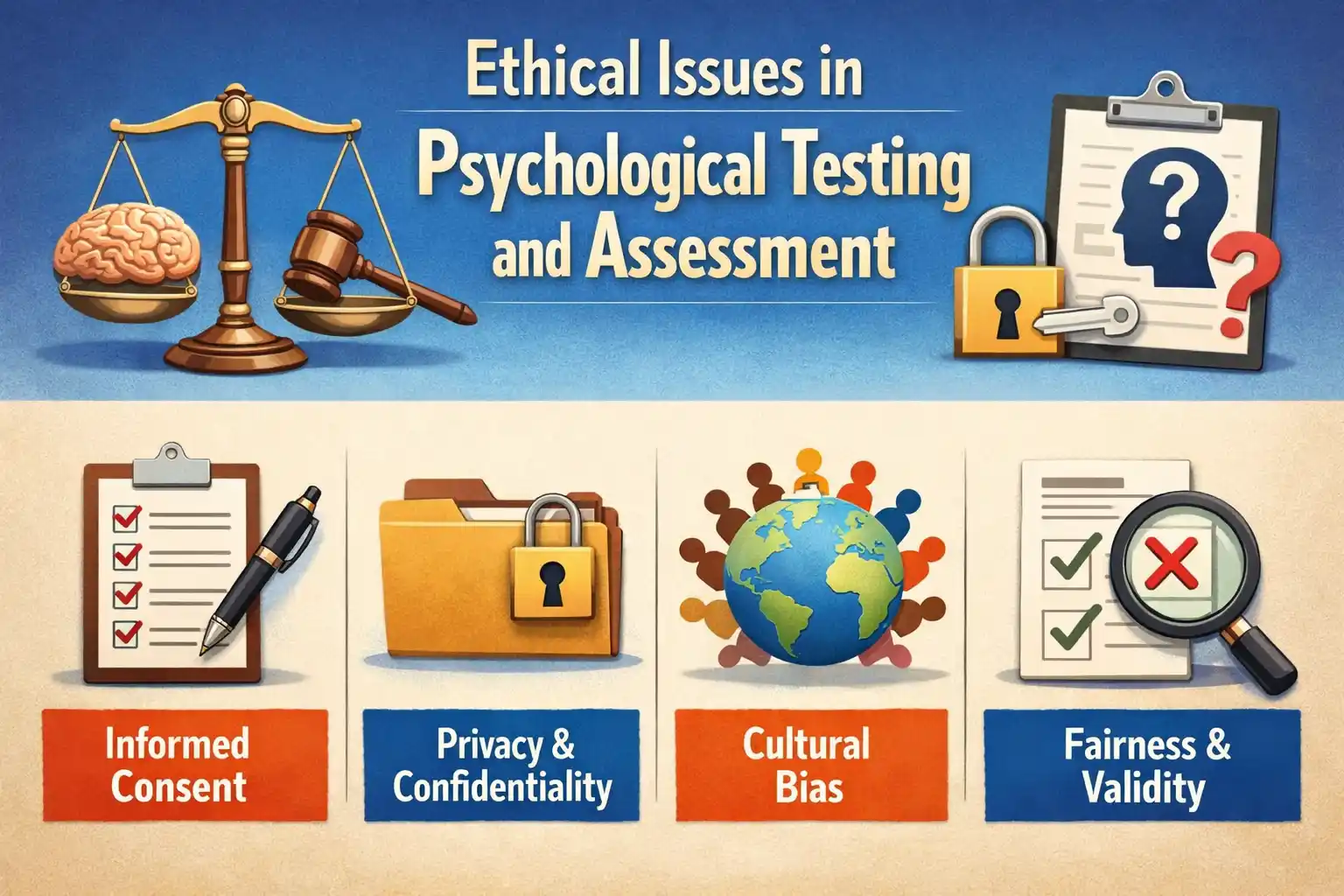
1. Informed Consent
Before conducting any test, clients must be informed about the assessment process, procedures, and potential outcomes of testing. They should know why the test is being conducted and how the results will be used. Lack of proper consent is one of the most common Ethical Issues in Psychological Assessment.
2. Confidentiality and Privacy
Assessment results often include personal information. Maintaining confidentiality is a core part of Ethical Standards in Psychological Testing. Psychologists must protect client data and disclose information only with authorized individuals.
3. Test Misuse and Incorrect Interpretation
Psychological tests require professional training. Administering assessments without proper knowledge or misinterpreting results can lead to misdiagnosis or inappropriate decisions affecting a individual’s life.
4. Cultural and Social Bias
Not all tests are suitable for every cultural or social background. Ethical psychologists consider language, culture, and social context to avoid unfair or biased conclusions.
5. Professional Competence
Psychologists should only conduct assessments they are trained to administer. Competence is a key responsibility within Ethics in Psychological Evaluation.
Start Your Career in Psychology Today! Gain practical training, expert mentorship, and real clinical exposure through our professional psychology courses and internship programs.
Psychological Assessment Ethics Guidelines
To maintain professional standards, psychologists follow established Psychological Assessment Ethics Guidelines. These guidelines help professionals conduct assessments responsibly and ethically.
Important ethical practices include:
- Using scientifically validated testing tools
- Remaining objective while interpreting results
- Avoiding personal assumptions or bias
- Providing feedback carefully and respectfully
- Maintaining updated professional knowledge
These guidelines ensure that assessments remain reliable and beneficial for clients.
Continue your learning journey — check out our next blog on Psychology Optional coaching vs Self-Study
Ethical Standards in Psychological Testing Practice
Maintaining Ethical Standards in Psychological Testing requires continuous awareness and accountability. Ethical psychologists focus on client wellbeing rather than simply completing an assessment.
Responsible testing involves accurate administration procedures, respectful communication, and careful reporting of findings. Psychologists must avoid labeling individuals or making exaggerated conclusions. Ethical practice promotes understanding and growth rather than judgment.
Ethics in Psychological Evaluation in Modern Practice
In contemporary practice, psychological assessments are increasingly conducted through digital platforms. While technology has improves accessibility and efficiency, it has also introduces new ethical concerns such as data privacy and secure storage of sensitive information.
Professionals practicing Ethics in Psychological Evaluation must ensure online assessments follow the same ethical standards as in-person testing. Protecting digital data and ensuring informed consent in online settings have become essential responsibilities.
Importance of Ethical Awareness for Psychology Students
Ethical understanding is especially important for psychology students and interns. Early exposure to ethical principles prepares future professionals to handle sensitive situations responsibly.
Learning about Ethical Issues in Psychological Testing and Assessment helps students develop professional integrity, improve decision-making skills, and build trust with future clients. Ethics is not just a theoretical subject — it is a practical foundation for every psychology career.
Conclusion
Ethics form the foundation of psychological assessment and professional psychology practice. Understanding Ethical Issues in Psychological Testing and Assessment ensures that testing remains fair, respectful, and scientifically accurate. By following Psychological Testing Ethics, applying proper Psychological Assessment Ethics Guidelines, and maintaining strong Ethical Standards in Psychological Testing, psychologists can provide responsible and meaningful evaluations.
Ultimately, ethical assessment protects individuals, strengthens professional credibility, and ensures psychology continues to support mental wellbeing in a safe and trustworthy manner.
FAQ
1. What are ethical issues in psychological testing and assessment?
They include confidentiality concerns, lack of informed consent, biased testing, misuse of results, and assessments conducted without proper qualifications.
2. Why are ethics important in psychological assessment?
Ethics protect client rights, ensure accurate interpretation, and prevent emotional or psychological harm.
3. What is informed consent in psychological testing?
It means clients fully understand the purpose, procedure, and use of assessment results before agreeing to participate.
4. How do psychologists maintain confidentiality?
By securely storing records and sharing results only with authorized individuals or with client permissionunless disclosure is legally required..
5. Can psychological tests be biased?
Yes, if cultural or social differences are ignored. Ethical psychologists choose appropriate tests to minimize bias.