How a Clinical Psychology Internship Supports Mental Health Practice
In recent years, mental health has become an increasingly important area of public discussion. More individuals are seeking emotional support, counselling, and psychological guidance than ever before. Because of this growing awareness, the need for trained psychology professionals is increasing rapidly. However, studying psychology through books alone is not enough. Real learning begins when theory meets real-life experience — and that is exactly where a Clinical Psychology Internship becomes important.

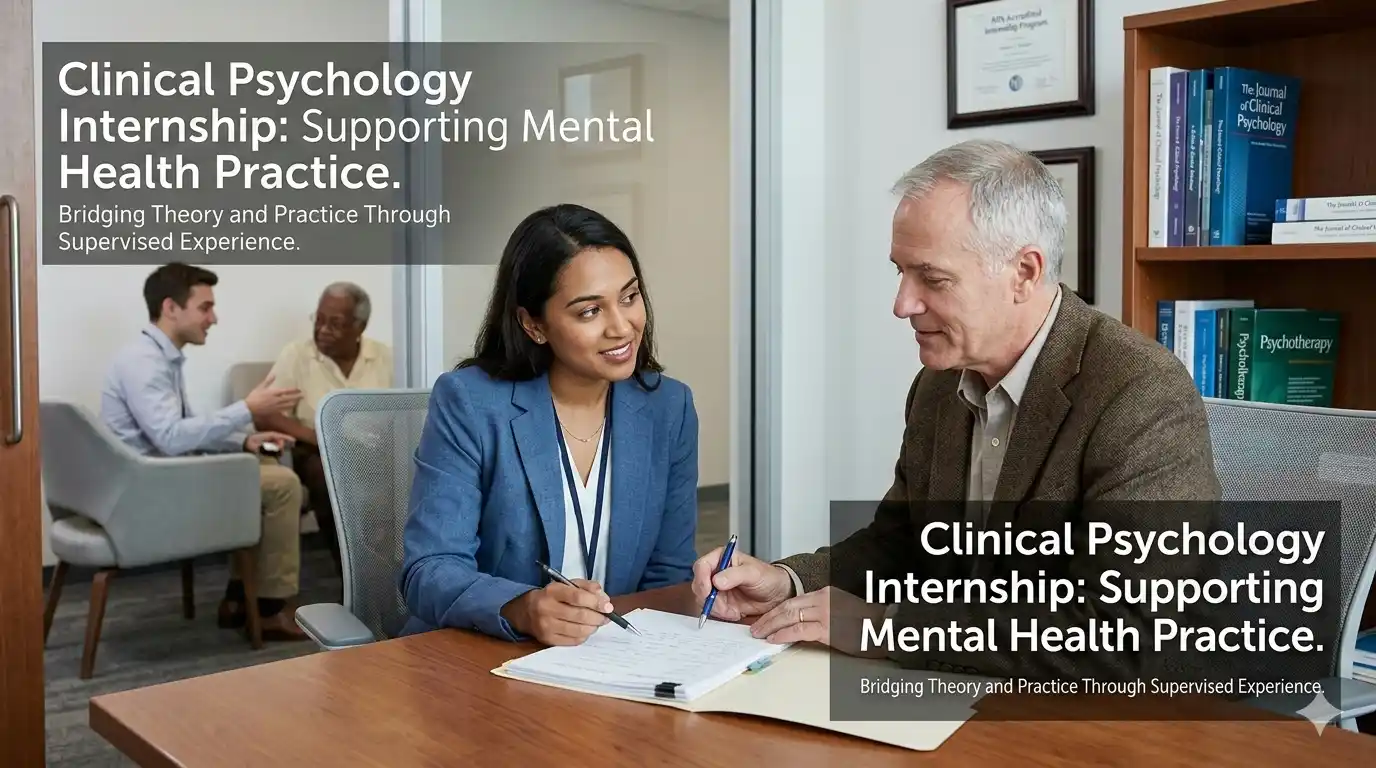
A structured Clinical Psychology Internship Program gives students the opportunity to step into real mental health environments and understand how psychological concepts work in practice. Through systematic Mental Health Practice Training, students learn to manage real-life situations, communicate effectively with clients, and develop professional confidence. A well-designed Psychology Internship Program helps transform academic knowledge into practical skills required for a successful psychology career.
Understanding the Importance of a Clinical Psychology Internship
A Clinical Psychology Internship acts as a bridge between classroom learning and professional practice. During internship training, students observe experienced psychologists, understand therapy procedures, and gradually learn how mental health professionals support individuals dealing with emotional and psychological challenges.
While academic education explains theories of behaviour and mental processes, Clinical Psychology Training teaches how these theories apply to real people with real concerns. Interns begin to understand how conditions such as anxiety, stress, trauma, and relationship issues are handled in actual counselling settings.
This exposure helps students become more empathetic, patient, and professionally aware — qualities that are essential in mental health practice.
Join Our Clinical Psychology Training Program
Developing Essential Counselling Skills
One of the biggest benefits of a Clinical Psychology Internship Program is the development of counselling skills. Many students initially feel nervous about interacting with clients, however internship training gradually builds confidence.
During Mental Health Practice Training, interns learn:
- How to listen actively without interrupting
- How to show empathy and emotional understanding
- How to ask open-ended and supportive questions
- How to create a safe and comfortable space for clients
- How to maintain confidentiality and professional ethics
These practical skills cannot be fully developed through textbooks alone. Direct client interaction within a Psychology Internship Program enables students to understand human emotions in a deeper and more meaningful manner.
Understanding Psychological Assessments
Assessment plays a major role in clinical psychology. Through a Clinical Psychology Internship, students learn how professionals evaluate mental health conditions using structured methods.
Interns gain exposure to:
- Basic psychological screening tools
- Behaviour observation techniques
- Case history documentation
- Understanding emotional and cognitive patterns
This part of Clinical Psychology Training helps students learn how psychologists assess concerns before developing appropriate therapy or intervention strategies.
Exposure to Real Mental Health Cases
One of the most valuable aspects of a Clinical Psychology Internship Program is exposure to real-life cases. Students may observe sessions related to anxiety, depression, stress management, relationship issues, or behavioural concerns.
Such experiences help interns understand that every individual is different. Mental health practice requires flexibility, patience, and strong emotional awareness. Through continuous Mental Health Practice Training, students learn how professionals adapt their approach based on each client’s needs.
This practical exposure also reduces fear and hesitation enabling students begin their own professional journey.
Explore our Clinical Psychology Internship Program and start your professional journey today.
Improving Communication and Professional Confidence
Many psychology students struggle with confidence in the beginning. A Psychology Internship Program creates a safe learning environment where interns can gradually improve communication skills and professional behaviour.
Interns learn how to:
- Present case discussions professionally
- Communicate respectfully with clients
- Work effectively under supervision
- Handle emotional conversations calmly
Over time, Clinical Psychology Training helps students become more confident in handling sensitive discussions and maintaining professionalism.
Understanding Ethics and Responsibilities in Mental Health Practice
Ethics play a fundamental role in psychology. During a Clinical Psychology Internship, students learn about confidentiality, consent, professional boundaries, and ethical decision-making.
Proper Mental Health Practice Training teaches interns how to respect client privacy and maintain trust — which is the foundation of any therapeutic relationship.Early exposure to ethical practices prepares students for responsible and professional conduct in their future careers.
Career Preparation Through Practical Experience
A Clinical Psychology Internship Program not only builds skills but also prepares students for future career opportunities. Internship experience strengthens professional profiles and provides clarity regarding various career paths within psychology.
After completing a Psychology Internship Program, students may explore roles such as:
- Counselling psychologist
- Mental health support professional
- Rehabilitation assistant
- School counsellor
- Therapy assistant
The confidence gained through Clinical Psychology Training makes the transition from student life to professional practice much smoother.
Why Internship Experience Matters in Mental Health Practice
Mental health practice requires more than theoretical knowledge. Professionals must understand emotions, human behaviour, and communication dynamics in real-time situations. A Clinical Psychology Internship provides exactly this kind of learning environment.
Through consistent Mental Health Practice Training, students develop empathy, patience, observation skills, and emotional intelligence — all of which are essential for becoming effective mental health professionals.
In simple words, internships help students move from “learning psychology” to actually “practicing psychology.”
FAQ – Clinical Psychology Internship
Q1.What is a Clinical Psychology Internship?
A Clinical Psychology Internship is practical training where psychology students gain real-world experience by observing and assisting mental health professionals.
Q2.Who can join a Clinical Psychology Internship Program?
Students pursuing psychology at undergraduate or postgraduate levels can enroll in a Clinical Psychology Internship Program to gain practical exposure.
Q3.Why is Mental Health Practice Training important?
Mental Health Practice Training helps students apply theoretical knowledge in real counselling situations and develop essential professional skills.
Q4.Does a Psychology Internship Program help in career growth?
Yes, a Psychology Internship Program improves practical skills, builds confidence, and increases job opportunities in the mental health field.
Q5.What skills are learned during Clinical Psychology Training?
During Clinical Psychology Training,Students learn counselling techniques, communication skills, psychological assessment basics, ethical practices, and professional behaviour through Clinical Psychology Training.