Introduction
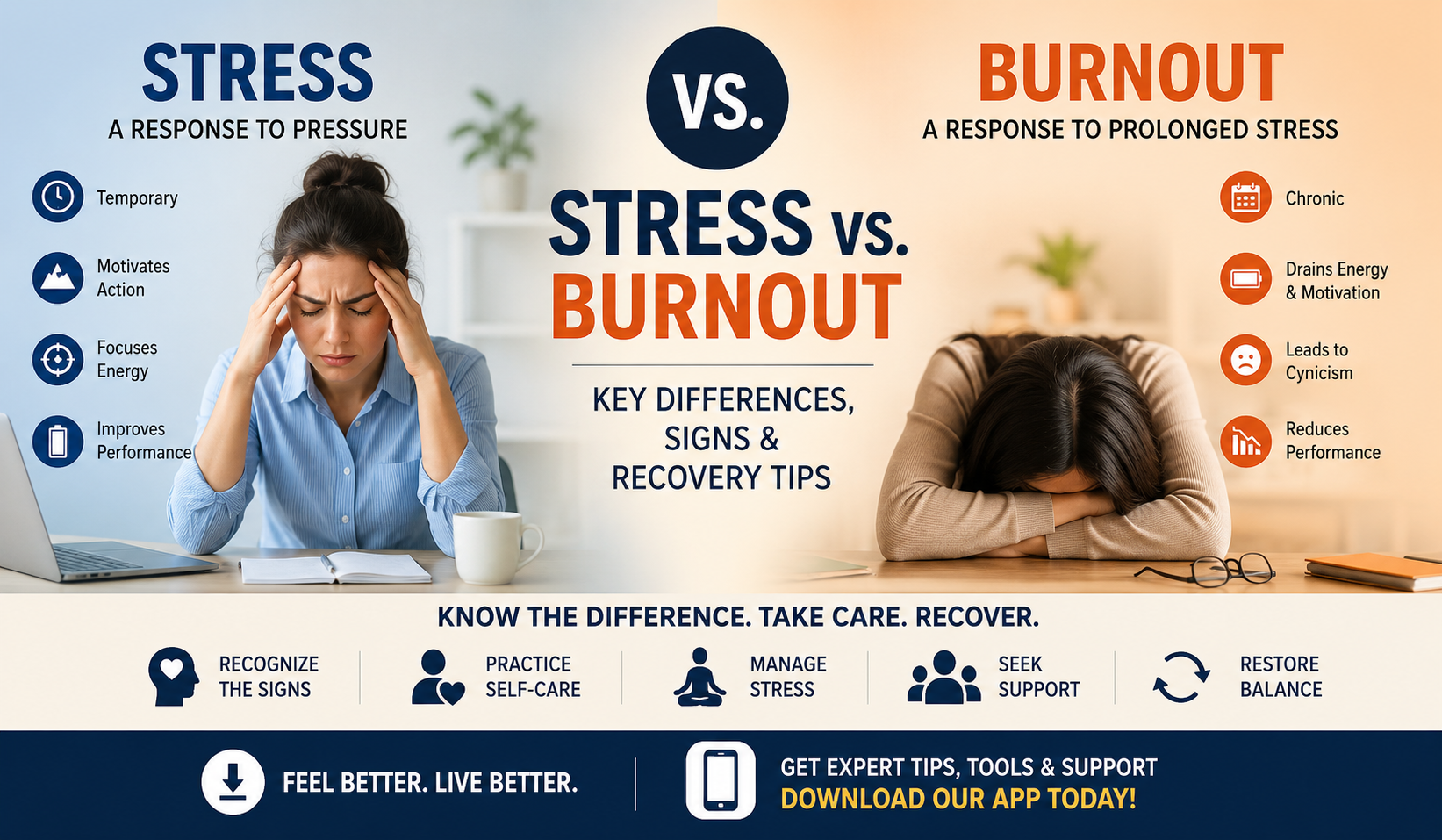
Stress and burnout are terms that often get tossed around as if they mean the same thing, but they actually refer to different experiences. Stress is usually a short-lived reaction to pressure or challenges, while burnout is a more enduring state of emotional, mental, and physical fatigue that arises from ongoing stress.
It’s crucial to grasp the distinction between stress and burnout because both can significantly impact mental health, productivity, relationships, and overall well-being. Spotting the signs early on can empower individuals to take proactive steps toward recovery.
Stress vs. Burnout
Stress tends to manifest as overwhelming pressure, urgency, and a sense of being swamped.
On the other hand, burnout shows up as emotional fatigue, detachment, a drop in motivation, and a feeling of being unable to cope.
Stress is the body’s instinctive reaction to challenges or demands. It can be temporary and, when managed well, might even enhance performance.
Burnout is a state of ongoing physical, emotional, and mental exhaustion brought on by prolonged stress, often leading to decreased productivity, cynicism, and a lack of motivation.
Take charge of your mental well-being today. Download our app and access psychology notes, self-help tools, and professional support all in one place.
What Is Stress?
Stress is a completely normal response both physically and mentally to situations that demand a lot from us. It’s our body’s way of gearing up to face challenges, thanks to the release of stress hormones like cortisol and adrenaline.
Common Causes of Stress
- Tight work deadlines
- Financial struggles
- Family obligations
- Academic pressure
- Relationship issues
- Major life changes
Common Symptoms of Stress
- Increased heart rate
- Irritability
- Anxiety
- Trouble concentrating
- Muscle tension
- Sleep disturbances
- Frequent headaches
Fortunately, stress can often be managed effectively with healthy coping strategies and lifestyle adjustments.
What Is Burnout?
Burnout is a state of total emotional, mental, and physical exhaustion that comes from chronic, unmanaged stress. It usually creeps up on you over time and can have a serious impact on both your work and personal life.
Common Causes of Burnout
- Excessive workload
- Poor work-life balance
- Ongoing workplace pressure
- Lack of recognition
- Limited control over your responsibilities
- Emotional exhaustion from caregiving roles
Common Symptoms of Burnout
- Constant fatigue
- Lack of motivation
- Emotional numbness
- Decreased productivity
- Cynicism and negativity
- Social withdrawal
- Feelings of helplessness
Recovering from burnout often requires more than just taking a break; it may involve seeking professional help, making changes at work, and developing long-term recovery strategies.
Continue Reading : What’s the Difference Between Stress and Anxiety?
Signs of Stress vs. Burnout
Recognizing the signs of stress and burnout can help you figure out what you might be dealing with.
Signs of Stress
Physical Signs of Stress
- Headaches
- Increased blood pressure
- Muscle tension
- Fatigue
Emotional Signs of Stress
- Worry
- Anxiety
- Irritability
- Restlessness
Behavioral Signs of Stress
- Overworking
- Difficulty relaxing
- Trouble sleeping
Signs of Burnout
Physical Signs of Burnout
- Chronic exhaustion
- Frequent illness
- Persistent fatigue
Emotional Signs of Burnout
- Detachment
- Hopelessness
- Loss of enthusiasm
Behavioral Signs of Burnout
- Procrastination
- Reduced performance
- Withdrawal from responsibilities
What Causes Burnout More Often Than Stress?
Burnout typically sets in when stress becomes a long-term issue that just won’t go away.
Key Burnout Triggers
- Constant pressure at work
- Lack of support from management
- Unrealistic expectations
- Poor work-life balance
- Emotional overload
- Not enough recognition
Unlike temporary stress, burnout creeps in over time, gradually draining both emotional and physical energy.
How Does Stress Affect Mental Health?
If left unchecked, stress can take a serious toll on mental health.
Effects of Chronic Stress
- Increased anxiety
- Mood swings
- Trouble concentrating
- Memory issues
- Higher risk of depression
While a little stress here and there is normal, chronic stress can really mess with your overall well-being and quality of life.
How Does Burnout Affect Mental Health?
Burnout can have a profound impact on mental health and emotional well-being.
Effects of Burnout
- Emotional exhaustion
- Loss of motivation
- Lower self-esteem
- Feelings of failure
- Increased risk of anxiety and depression
Long-term burnout can hurt both your work performance and personal relationships.
Can Stress Turn Into Burnout?
Absolutely. Chronic, unmanaged stress can eventually spiral into burnout.
When stress lingers for weeks, months, or even years without proper recovery, your body’s coping mechanisms can get overwhelmed. This ongoing pressure can lead to emotional exhaustion, mental fatigue, and all the classic signs of burnout.
How Can You Prevent Stress and Burnout?
To keep stress and burnout at bay, it’s important to take proactive steps for self-care and adopt healthy habits.
Strategies to Manage Stress
- Get regular exercise
- Practice mindfulness
- Keep a healthy sleep routine
- Prioritize your tasks
- Take regular breaks
Strategies to Prevent Burnout
- Set realistic boundaries
- Maintain a work-life balance
- Delegate tasks when possible
- Seek support from others
- Take vacations and time to recharge
- Address workplace issues early on
When Should You Seek Professional Help?
Professional support may be necessary when symptoms interfere with daily life.
Seek Help If You Experience
- Persistent exhaustion
- Severe anxiety
- Depression symptoms
- Chronic sleep problems
- Inability to perform daily tasks
- Emotional distress lasting several weeks
Mental health professionals can provide personalized strategies to manage stress and recover from burnout.
Frequently Asked Questions About Stress and Burnout
Is Burnout Worse Than Stress?
Burnout is often seen as the more serious issue because it stems from long-term, unmanaged stress. While stress can usually be alleviated with some rest and relaxation, recovering from burnout often requires major lifestyle changes and sometimes professional help.
Can You Recover From Burnout?
Absolutely. Recovery from burnout is achievable through reducing stressors, improving work-life balance, prioritizing self-care, and seeking support when necessary.
What Are the First Signs of Burnout?
The initial signs of burnout include ongoing fatigue, reduced motivation, emotional exhaustion, difficulty concentrating, and growing detachment from work or daily responsibilities.
How Long Does Burnout Last?
Burnout recovery varies from person to person. Some individuals recover within a few weeks, while others may require several months depending on severity and lifestyle changes.
Can Stress Be Positive?
Yes. Positive stress, known as eustress, can improve focus, motivation, and performance. However, it becomes harmful when it is excessive, chronic, or unmanaged.
Conclusion
Understanding the difference between stress and burnout is essential for protecting mental health and overall well-being. Stress is generally temporary and manageable, whereas burnout is a serious condition resulting from prolonged, unresolved stress.
Recognizing the symptoms of stress vs. burnout early can help individuals take action, build resilience, and prevent long-term emotional and physical exhaustion. By prioritizing self-care, maintaining healthy boundaries, and seeking support when needed, it is possible to manage stress effectively and avoid burnout.