
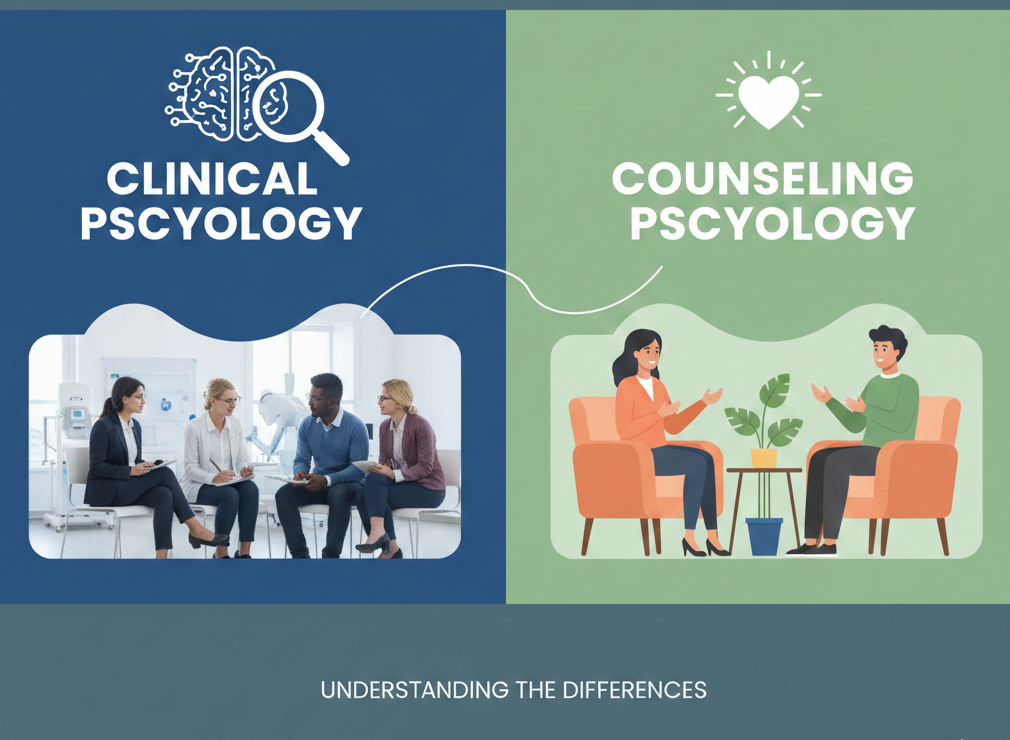
Clinical psychology and counselling psychology are two closely related branches of psychology however, each has its own distinct characteristics.Many students considering a career in the field of mental health often seek to understand the differences between these two disciplines.

What Is Clinical Psychology?
Clinical psychology is a specialized field of psychology that focuses on diagnosing, treating, and preventing mental, emotional, and behavioural disorders. Clinical psychologists are skilled professionals who assist individuals dealing with serious psychological conditions, using scientifically validated assessment tools and evidence-based therapeutic interventions.
The main focus areas of clinical psychology include:
- Mental illnesses like depression, anxiety, and schizophrenia
- Psychological assessment and accurate diagnosis
- Psychotherapy and clinical interventions
- Rehabilitation and strategies to prevent relapse
What Is Counselling Psychology?
Counselling psychology focuses on supporting people as they navigate emotional, social, and life challenges. Instead of focusing on diagnosing serious mental health issues, it prioritizes personal growth, self-awareness, and effective problem-solving.
Here are some key areas that counselling psychology addresses:
- Stress, relationship difficulties, and career challenges
- Emotional well-being and adapting to change
- Life transitions and personal growth
- Preventive mental health care
How Is Clinical Psychology Different from Counselling Psychology?
Clinical psychology and counselling psychology differ in their focus, training, client needs, and work settings. Clinical psychology emphasizes the diagnosis and treatment of mental disorders, whereas counselling psychology focuses on guidance, emotional support, and life adjustment.
Clinical Psychology vs Counselling Psychology: Comparison Table
| Basis of Comparison | Clinical Psychology | Counselling Psychology |
| Primary Focus | Mental illness and disorders | Emotional and life issues |
| Diagnosis | Involves formal diagnosis | Usually no diagnosis |
| Client Severity | Severe and complex cases | Mild to moderate issues |
| Type of Therapy | Clinical and medical-based | Talk therapy and guidance |
| Work Settings | Hospitals, clinics, rehab centers | Schools, colleges, NGOs |
| Approach | Pathology-oriented | Wellness-oriented |
What Does a Clinical Psychologist Do?
Clinical psychologists play a crucial role in the mental health field by assessing, diagnosing, and treating individuals experiencing psychological disorders and mental health challenges. They utilize standardized psychological assessments and scientifically validated therapeutic techniques in their practice.
Their typical duties involve:
- Conducting comprehensive psychological assessments
- Diagnosing mental health disorders
- Providing effective psychotherapy
- Developing individualized treatment plans
- Collaborating with psychiatrists and hospitals
What Does a Counselling Psychologist Do?
Counseling psychologists support individuals in managing emotional difficulties and enhancing overall psychological well-being through empathetic and client-centered approaches.Their work focuses on helping clients cope with life stressors and improve personal functioning
key responsibilities include:
- Providing individual or group counselling sessions
- Assisting clients in managing stress,anxiety and trauma
- Providing guidance for career and academic paths
- Supporting interpersonal relationships and family dynamics
- Promoting personal growth and mental wellness
Educational Pathway for Clinical Psychology vs Counselling Psychology
Education for Clinical Psychology
To pursue a career in psychology, particularly in clinical or counseling psychology,individuals typically follow a structured educational pathway .
- Completion of a Bachelor’s degree in psychology
- Pursuit of a Master’s degree in Clinical Psychology
- Enrollment in an advanced qualification such as an MPhil or PsyD, which is required in many countries
- Fulfillment of licensing or professional registration requirements
Education Pathway for Counselling Psychology
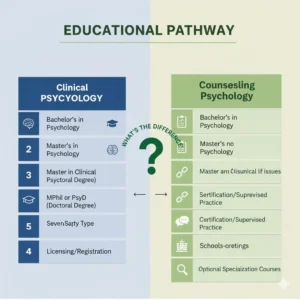
Individuals aspiring to build a career in Counselling Psychology generally follow these educational steps:
- Completion of a Bachelor’s degree in
- Pursuit of a Master’s in Counselling
- Completion of certification or supervised practice training.
- Optional enrollment in specialization courses to enhance professional expertise
Career Scope in Clinical Psychology and Counselling Psychology (2026 Outlook)
As we approach 2026, increasing awareness around mental health has significantly expanded career opportunities in both clinical and counselling psychology.
Career options in Clinical psychology include:
- Clinical Psychologist
- Mental Health Specialist
- Rehabilitation Psychologist
- Hospital-based Therapist
counselling psychology offers paths such as:
- Counsellor
- School or College Psychologist
- Career Counsellor
- Wellness Coach
Which Is Better: Clinical Psychology or Counselling Psychology?
Determining whether clinical psychology or counselling psychology is the better career option depends largely on individual interests and professional goals. Neither discipline is inherently superior to the other.Individuals who are interested in the diagnosis and treatment of mental illness, psychological assessments, and working closely with medical professionals may find clinical psychology to be a suitable career path.In contrast, those who prefer offering guidance, emotional support, and fostering personal development, then counselling psychology could be the way to go. Your choice should really reflect your interests, strengths, and what you envision for your future.
FAQs: Clinical Psychology vs Counselling Psychology
1. Is clinical psychology more challenging than counseling psychology?
Clinical psychology is generally considered more demanding due to its focus on diagnosis, clinical assessments, and medical collaboration, making it academically and practically more demanding than counselling psychology.
2. Can a counselling psychologist treat mental illness?
Counselling psychologists typically work with individuals experiencing mild to moderate emotional or psychological concerns . Severe mental disorders are treated by clinical psychologists and psychiatrists.
3. Does clinical psychology require a license?
Yes. Clinical psychology requires formal licensing or registration to practice legally in most countries.
4. Is it possible to transition from counselling psychology to clinical psychology?
YesHowever, this transition required clinical training, degrees, and supervised practice in clinical psychology.
5. Which field offers higher salary potential:: clinical psychology or counselling psychology?
Clinical psychology generally offers higher salaries due to advanced specialization, diagnosis authority, and hospital-based roles.
6. Will counselling psychology be in demand in 2026?
Yes. Counselling psychology is expected to remain in high demand due to increased stress, career uncertainty, and mental wellness awareness.
