

Skills Required to Become a Counselling Psychologist
In today’s fast-paced world, mental health has become an essential component of overall well-being. As awareness continues to grows, the need for trained counselling psychologists is also increasing.
Many students are now choosing psychology as a career because it offers both professional growth and the opportunity to make a meaningful difference in people’s lives.
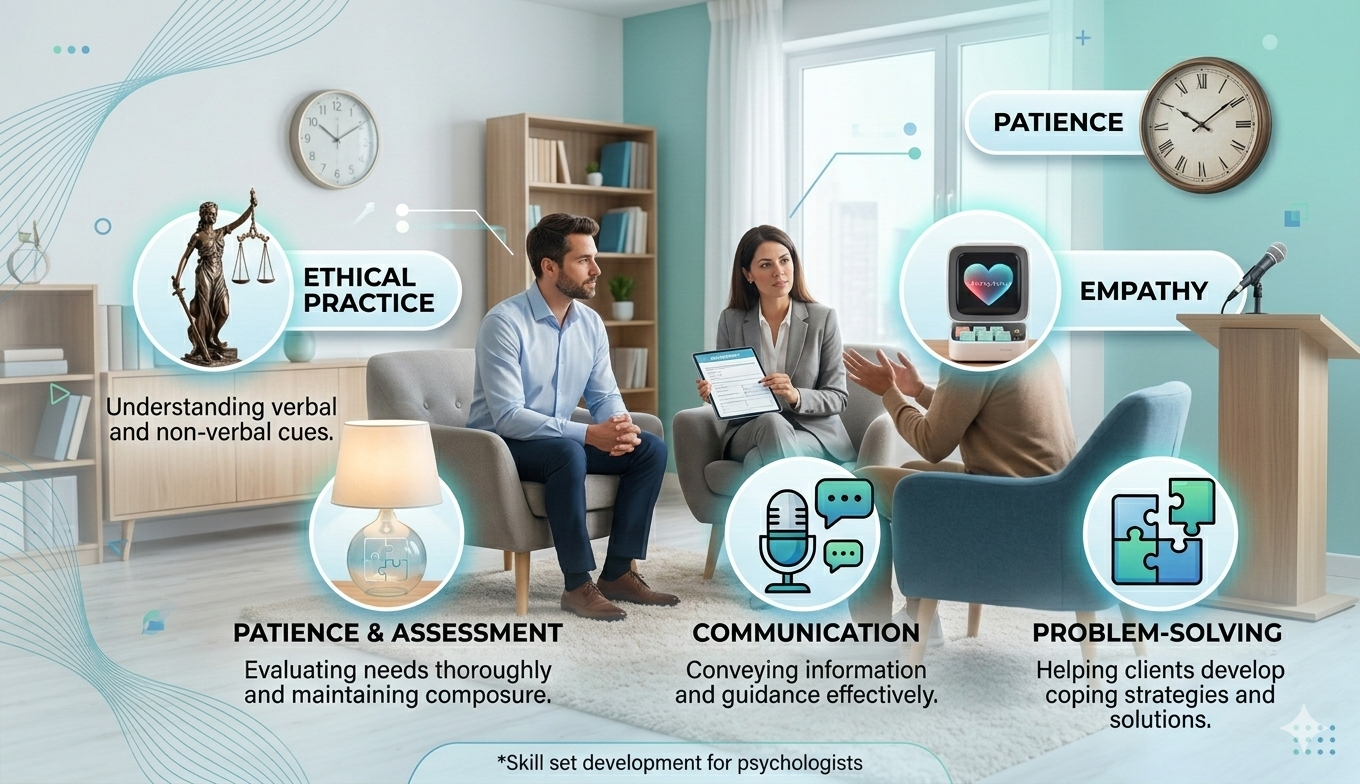
However, achieving success in this field requires much more than academic knowledge. Understanding the Skills Required to become a Counselling Psychologist helps students prepare for real-world challenges and build a strong professional foundation. Counselling psychology is a people-oriented profession, and success depends on developing practical abilities along with theoretical understanding.
In this article, we will explore the most essential Counselling Psychologist Skills that every aspiring professional should develop.
Strong Communication Skills
One of the most important Skills for a Counselling Psychologist is effective communication. Counselling mainly happens through conversations, where clients share personal thoughts, emotions, and experiences. A psychologist must communicate in a manner that is safe, respectful, and supportive.
Effective communication is not limited to speaking clearly — it also involves active listening and thoughtful responses. Clients feel comfortable only when they know they are being genuinely heard and understood..
Important communication abilities include:
- Active and focused listening
- Using clear and comforting language
- Asking open-ended questions
- Maintaining a calm and respectful tone
- Understanding verbal and non-verbal cues
Developing these communication skills helps build trust, which is the foundation of every successful counselling relationship.
Interested in building real-world psychology skills?
Empathy and Emotional Intelligence
Empathy lies at the core of counselling psychology. A counselling psychologist must be able to understand a client’s feelings without judging or criticizing them.
Among the most valuable professional Skills, emotional intelligence enables psychologists to manage both client’s emotions and their own reactions during sessions. Psychologists often work with individuals experiencing stress, anxiety, trauma, or emotional pain,therefore responding with compassion and sensitivity is essential.
Key emotional intelligence abilities include:
- Understanding emotions from the client’s perspective
- Maintaining emotional stability during sessions
- Showing compassion while remaining professional
- Creating a safe emotional environment
These skills are essential for building a successful career in counselling psychology, as they enable professionals to support clients effectively while maintaining ethical and professional standards.
Active Listening and Observation
In counselling, listening is often more important than speaking. Clients may not always express their concerns directly, which makes observation skills extremely important.
Observation is one of the essential skills of a counselling psychologist, as professionals must be able to recognize subtle emotional shifts, body language, and behavioural patterns.
Important observation skills include:
- Recognizing emotional cues and reactions
- Observing body language and facial expressions
- Identifying underlying concerns or stress factors
- Understanding patterns in behavior and communication
These abilities help psychologists to gain deeper insight into a client’s experiences and challenges.
Explore our Counselling Psychology Internship Program and start your professional journey today.
Problem-Solving and Analytical Thinking
Every client’s situation is unique, and counselling psychologists must thoroughly understand problems before recommending appropriate interventions . Analytical thinking is therefore an important skill for a Counselling Psychologist.
Psychologists use psychological theories along with practical understanding to guide clients toward healthier coping strategies.
Examples of analytical abilities include:
- Understanding psychological concepts and applying them in practical settings
- Analyzing client history and emotional patterns
- Determining appropriate intervention approaches
- Monitoring progress throughout therapy
Such Counselling Psychology Skills improve decision-making and help professionals provide effective psychological support.
Ethical Awareness and Professional Responsibility
Ethics play a central role in counselling psychology. Clients share deeply personal information, and maintaining confidentiality is essential for building trust.
Ethical practice is one of the most critical Counselling Psychologist Career Skills as it ensures both professionalism and client safety.
Key ethical responsibilities include:
- Maintaining confidentiality and privacy
- Obtaining informed consent before sessions
- Maintaining professional boundaries
- Avoiding personal bias or judgment
- Following professional ethical guidelines
Strong ethical awareness helps psychologists build credibility and long-term professional trust.
Patience and Emotional Stability
Counselling is a gradual process, and meaningful change does not occur overnight. Psychologists must remain patient and supportive throughout a client’s therapeutic journey.
Patience is one of the most important Skills needed for a Counselling Psychology Career, as each individual progresses at different pace.
Important aspects include:
- Remaining calm during emotional discussions
- Providing consistent and structured support
- Managing stress effectively
- Practicing self-care and emotional balance
Emotional stability helps professionals maintain effectiveness without experiencing burnout.
Rapport Building and Interpersonal Skills
Clients are more likely to open up when they feel comfortable and understood. Building rapport efficiently is therefore a crucial component of counselling practice.
Strong interpersonal skills are essential for creating a warm, respectful, and welcoming therapeutic environment.
Rapport-building techniques include:
- Demonstrating genuine interest in clients
- Maintaining a non-judgmental and approachable
- Communicating with positivity and encouragement
- Creating emotional safety during sessions
Effective rapport strengthens therapeutic relationships and improves counselling outcomes.
Adaptability and Continuous Learning
Psychology is constantly evolving, and professionals must commit to continuous learning throughout their careers. Adaptability is an important part of Counselling Psychology Skills, especially when working with clients from different backgrounds and experiences.
Continuous professional development may include:
- Attending workshops and training programs
- Learning new counselling techniques
- Understanding modern mental health challenges
- Updating professional knowledge regularly
This growth mindset helps psychologists remain effective and relevant.
Self-Awareness and Personal Growth
Before effectively supporting others, counselling psychologists must develop a strong understanding of themselves.Self-awareness allows professionals to recognize personal emotions, biases, and reactions.
Among the many skills required to Become a Counselling Psychologist, self-reflection plays a powerful role in maintaining professionalism.
Self-awareness helps psychologists:
- Stay objective during sessions
- Avoid projecting personal experiences onto clients
- Improve emotional regulation
- Develop professional maturity
- Personal growth directly enhances counselling
Conclusion
Understanding the Skills Required to Become a Counselling Psychologist is essential for anyone planning to pursue a career in the field of mental health. Counselling psychology requires a balance combination of theoretical knowledge, empathy, communication, and ethical responsibility.
By developing strong Counselling Psychologist Skills and continuously improving Skills Needed for Counselling Psychology Career, aspiring professionals can build meaningful careers while making a positive impact on individuals lives. With dedication and consistent learning, counselling psychology becomes not just a profession but a purpose-driven journey.
Frequently Asked Questions (FAQ)
Q1.What skills are most important for counselling psychologists?
Effective Communication, empathy, active listening, emotional intelligence, and ethical awareness are considered the most important skills.
Q2.Can counselling psychology skills be developed through practice?
Yes,practical experience gained through internships, training programs, and supervised practice help students develop practical counselling skills.
Q3.Are interpersonal skills necessary for counselling psychologists?
Absolutely. Strong interpersonal skills are essential for building trust, establishing rapport, and maintaining positive therapeutic relationships with clients.
Q4.Do counselling psychologists require emotional stability?
Yes, emotional stability helps professionals to manage sensitive conversations while maintaining professionalism.
Q5.How can students begin developing counselling psychology skills?
Students can start by improving their communication skills, practicing active listening, attending training programs, and gaining internship experience.
