Introduction :
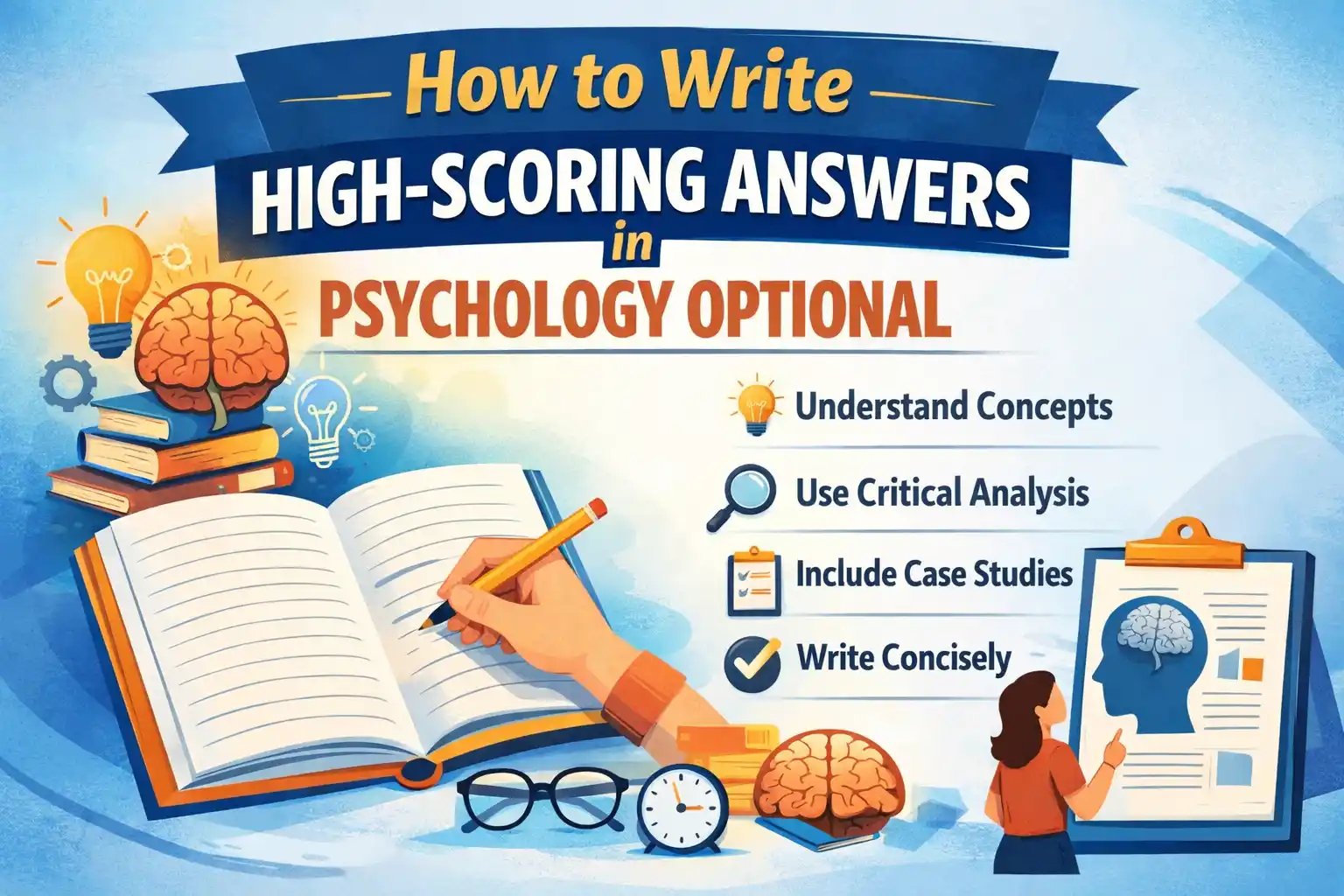
Crafting high-scoring answers in psychology optional is an essential skill for UPSC and MPSC hopefuls. Achieving success goes beyond just memorizing facts—it’s all about clarity, structure, and effectively applying psychological concepts. By mastering the art of psychology optional answer writing, you can ensure your responses are concise, easy for examiners to read, and geared towards earning maximum marks.
This guide provides practical psychology optional tips and a straightforward psychology optional exam strategy to help students reach their highest potential.
Why Structure Matters in Psychology Optional Answer Writing
Having a well-structured answer makes it easier for examiners to follow your thought process, which can significantly boost your chances of scoring high marks.
Key Elements of Effective Answer Writing
- Introduction: Define the concept in 20–30 words
- Body: Utilize subheadings, bullet points, or numbered lists
- Examples/Case Studies: Illustrate psychological concepts
- Conclusion: Clearly summarize the main ideas
Well-organized answers simplify the process of writing high scoring answers in psychology optional.
How to Kick Off Your Psychology Answer
Many students ask, “What’s the best way to start my answer?”
- Begin with a clear definition or explanation
- Reference key theorists or models when relevant
- Keep your introduction short (30–40 words)
Example:
“Memory is the mental process of encoding, storing, and retrieving information, as outlined by Atkinson and Shiffrin’s multi-store model (1968).”
You May Also Like To Read : How Clinical Psychology Internship Helps in Mental Health Practice
Making the Most of Bullet Points and Lists
Bullet points are a vital part of psychology optional answer writing. They present information in a concise, easy-to-digest format that examiners really appreciate.
When to Incorporate Bullet Points
- Stages of psychological processes (like memory, learning, perception)
- Different types of therapies or interventions
- Steps involved in experiments or research studies
- Comparing various psychological theories
Example:
Types of Reinforcement in Operant Conditioning:
- Positive Reinforcement
- Negative Reinforcement
- Punishment
- Extinction
Using lists helps keep your answers sharp, organized, and friendly for scoring.
Including Examples in Your Answers
When it comes to psychology answers, including examples can showcase your understanding and make your responses more impactful.
- Reference classic studies like Pavlov, Bandura, or Skinner
- Include practical scenarios such as stress management techniques or cognitive strategies
- Keep examples concise and relevant
Example:
“Bandura’s Bobo doll experiment illustrated how children can learn aggressive behaviors through observation, which underscores the principles of social learning.”
Continue Your Learning Journey Read Our Next Blog On : How a Clinical Psychology Internship Supports Mental Health Practice
Time Management for High-Scoring Answers
Mastering your time is crucial for a successful psychology optional exam strategy.
- Set aside 10–15 minutes for each 10-mark question
- Leave 5 minutes at the end to review your answers
- Keep paragraphs short and to the point
Good time management ensures your psychology optional answers are thorough, precise, and easy for the examiner to read.
Common Mistakes to Avoid
Even the most capable students can lose marks if their answers aren’t presented well.
Mistakes to Watch Out For
- Writing long, rambling paragraphs
- Overloading answers with irrelevant theories
- Skipping examples or case studies
- Ignoring subheadings or bullet points
- Failing to summarize key points
Avoiding these mistakes will help you craft high scoring answers in psychology optional.
Top Psychology Optional Tips
- Start with a clear definition
- Utilize subheadings and bullet points to enhance clarity
- Incorporate relevant examples or case studies
- Consider comparing theories using tables or charts
- Wrap up with a brief, focused conclusion
Following these tips ensures your answers are well-structured, easy to read, and likely to score high marks.
FAQs on Psychology Optional Answer Writing
1. What is psychology optional answer writing?
- Crafting and presenting answers in a clear, organized way for UPSC or MPSC exams using definitions, examples, and a structured format.
2. How do I write high-scoring answers in psychology optional?
- Focus on clear definitions, bullet points, examples, and consider using tables, while managing time effectively.
3. Should I include examples and case studies?
- Absolutely! Relevant examples demonstrate the application of theory and boost marks.
4. How should I start a psychology answer?
- Kick off with a succinct definition and reference relevant theorists or models.
5. Are tables and diagrams necessary?
- Not required, but they enhance clarity and make your answers examiner-friendly.
6. How long should an answer be for high scoring?
- About 2–3 short paragraphs or 6–8 lines per 10-mark question; use bullet points for lists.
Conclusion
Getting the hang of psychology optional answer writing is crucial for UPSC and MPSC candidates aiming for top scores. By applying psychology optional tips, using bullet points, tables, examples, and a smart exam strategy, you can ensure your answers are structured, concise, and examiner-friendly.
Following this approach consistently will help you craft high scoring answers in psychology optional, boosting both confidence and performance on exam day.