Types of Psychological Tests Used in Clinical Practice
Psychological tests used in clinical practice are essential tools for the assessment of mental health, personality, cognitive functioning, and emotional processes.Although clinical interviews and observations provide valuable insights, psychological tests add objectivity and scientific rigor to the assessment process. These standardized instruments assist psychologists in making accurate diagnoses, designing effective treatment plans, and monitoring client progress over time.
Psychological tests are widely used in hospitals, clinics, schools, rehabilitation centers, and private practices. They serve multiple purposes, from understanding intellectual abilities and personality traits to identifying emotional disorders or cognitive deficits. For students and aspiring clinical psychologists, an understanding of the various types of psychological tests is essential for professional growth and ethical practice.
Importance of Psychological Tests in Clinical Practice
Psychological tests are standardized and scientifically validated tools that provide measurable data regarding an individual’s mental functioning. Their importance in clinical practice lies in several key functions:
● They provide objective information that complements interviews and observations
● They facilitate accurate diagnosis of mental health conditions
● They guide treatment planning and intervention strategies
● They allow monitoring of client progress over time
● They enhance the ethical and scientific quality of clinical practice
Proper administration and interpretation by trained professionals ensure that these tests are reliable valid, and clinically meaningful results.
Visit our course page to learn more about our programs. https://drartipsych.com/psychological-testing-evaluation-foundations/
Types of Psychological Tests Used in Clinical Practice
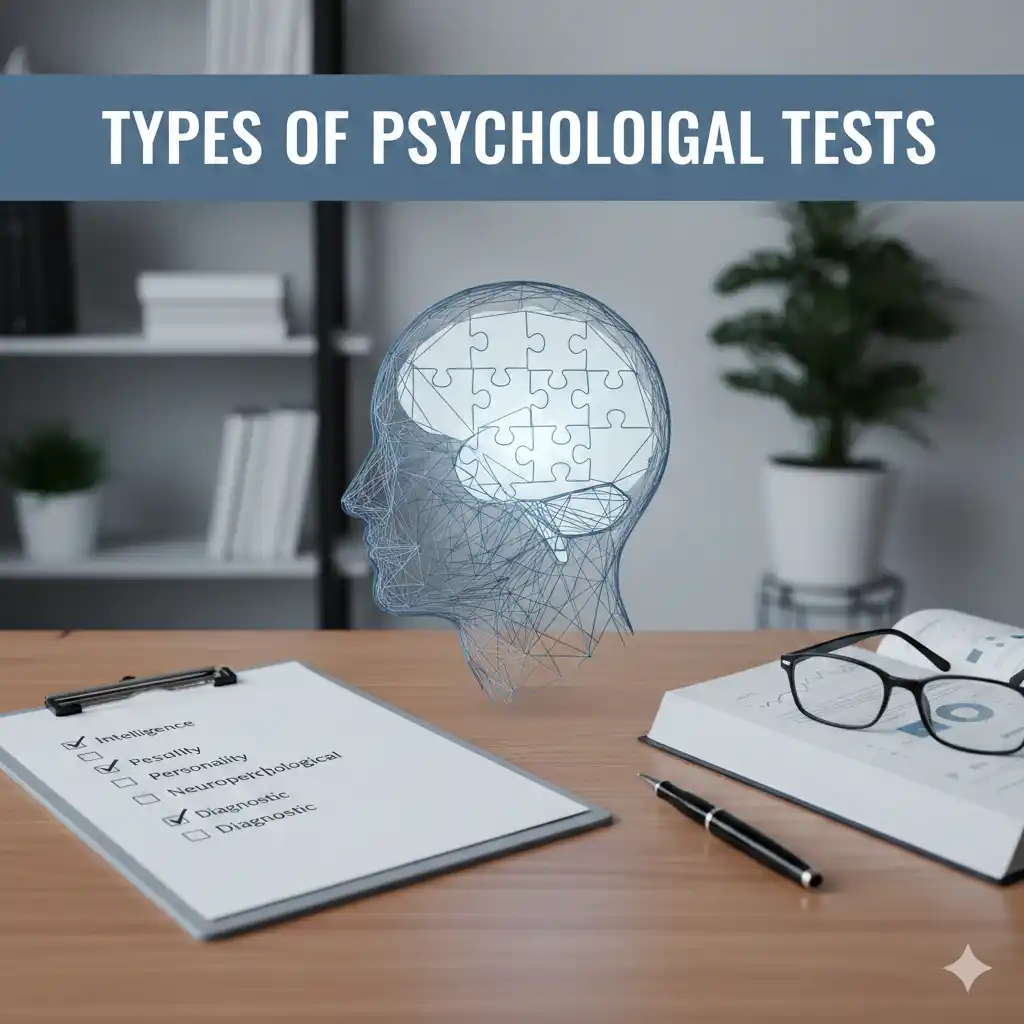
Psychological tests are generally categorized based on what they assess. Here are the main types:
1. Intelligence Tests
Intelligence tests measure cognitive abilities such as reasoning, problem-solving, memory, comprehension, and learning capacity. These tests are useful in evaluating intellectual functioning, identifying learning difficulties, and diagnosing developmental delays.
Examples include:
Wechsler Adult Intelligence Scale (WAIS)
Wechsler Intelligence Scale for Children (WISC)
Stanford-Binet Intelligence Test
Intelligence tests provide standardized scores, often expressed as IQ, which help psychologists understand cognitive strengths and weaknesses and make informed clinical judgments.
2. Personality Tests
Personality tests assess an individual’s traits, emotional patterns, and behavioral tendencies. They play a crucial role in understanding how a person thinks, feels, and interacts with the environment.
Types of personality tests:
● Objective Tests:These consist of Structured questionnaires with fixed responses; easy to administer,score and interpret.
Examples: Minnesota Multiphasic Personality Inventory (MMPI), 16 Personality Factor Questionnaire (16PF)
● Projective Tests: These involve unstructured ,Open-ended tasks that reveal unconscious thoughts, feelings, and motivations. Interpretation requires clinical expertise.
Examples: Rorschach Inkblot Test, Thematic Apperception Test (TAT)
Personality tests help in therapeutic planning, career guidance, and diagnosing psychological disorders.
3. Neuropsychological Tests
Neuropsychological tests evaluate brain functioning and cognitive abilities. They are often used to assess memory, attention, problem-solving, and executive functions, especially when neurological disorders are suspected.
Applications include:
● Assessment of brain injury
● Diagnosis of dementia or other memory-related disorders
● Identification of attention-deficit/hyperactivity disorder ADHD or learning disabilities
Examples:
● Bender Visual-Motor Gestalt Test
● Wisconsin Card Sorting Test
● Trail Making Test
These instruments assist clinicians in identifying cognitive deficits and guide rehabilitation or intervention strategies.
4. Emotional and Behavioural Assessment Tests
These tests measure emotions, moods, and behaviors to identify mental health conditions such as depression, anxiety, or behavioral disorders.
Examples:
● Beck Depression Inventory (BDI)
● Beck Anxiety Inventory (BAI)
● Child Behavior Checklist (CBCL)
These allow clinicians to understand emotional functioning and monitor treatment progress over time.
5. Aptitude and Achievement Tests
Aptitude and achievement tests measure skills, learning potential, and academic or vocational abilities. They are particularly useful in educational and career counselling settings.
Examples:
● Differential Aptitude Tests (DAT)
● Scholastic Achievement Tests
These tests help identify areas of strength and weakness, guiding career or educational planning and career decision-making.
6. Diagnostic and Clinical Rating Scales
Diagnostic and clinical rating scales evaluate the severity of symptoms and monitor treatment outcomes. They are commonly used in clinical practice for mental health assessment.
Examples:
● Hamilton Depression Rating Scale
● Yale-Brown Obsessive Compulsive Scale (Y-BOCS)
Rating scales are valuable for treatment planning, monitoring changes over time, and research purposes.
Benefits of Using Psychological Tests
● Using psychological tests in clinical practice offers several benefits:
● Enhances diagnostic accuracy
● Provides objective, standardized data
● Supports treatment planning and intervention
● Helps track patient progress systematically
● Improves research and academic outcomes
For clinical psychologists, developing proficiency in the administration and interpretation of psychological tests is essential to ensuring ethical, effective, and evidence-based practice.
Conclusion
The types of psychological tests used in clinical practice are indispensable tools for understanding cognition, personality, emotion, and behavior. Intelligence tests, personality assessments, neuropsychological evaluations, emotional and behavioral measures, aptitude tests, and diagnostic scales all contribute to comprehensive client assessment. When administered and interpreted appropriately, these instruments support accurate diagnosis, informed treatment planning, and maintenance of professional, ethical clinical practice.
FAQ – Psychological Tests
Q1. What are the main types of psychological tests?
The primary categories include Intelligence tests, personality tests, neuropsychological tests, emotional/behavioral, aptitude/achievement, and diagnostic scales.
Q2. Who is qualified to administer psychological tests?
Psychological tests should be administered and interpreted exclusively by trained and qualified professionals like clinical psychologists.
Q3. Are psychological tests reliable?
Yes, when psychological tests are standardized and administered properly, they provide reliable and valid results.
Q4. What is the difference between objective and projective personality tests?
Objective personality tests have structured responses; whereas projective tests use open-ended responses to reveal unconscious thoughts and emotions.
Q5. Can psychological tests be used independently for diagnosis?
No. Psychological tests are not used in isolation; rather, They complement clinical interviews, observations, and case histories to provide a complete assessment.