
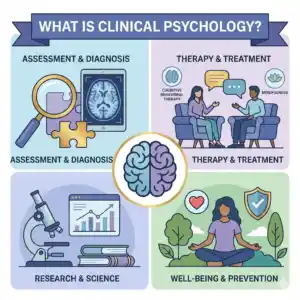
What Is Clinical Psychology?
Clinical psychology are trained professionals with expertise in the assessment and understanding of complex psychological processes underlying human behaviour and emotion. It aims to understand, identify, and treat emotional and behavioural issues. Clinical psychologists work with people across the lifespan—children, adolescents,adults, and older adults.
They provide psychological services in a variety of settings, such as hospitals, mental health clinics educational institutions, private practice, and community organisations.
Role Of Clinical Psychologists ?
Clinical psychologists are trained professionals with expertise in the assessment and understanding of complex psychological processes underlying human behaviour and emotion.They assist individuals in requlating emotions and modifying maladaptive behaviours through structured psychological interventions, commonly referred to as psychotherapy.
The responsibilities of Clinical Psychologists include:
· Conducting assessments to evaluate ar individual’s mental health status.
· Providing psychological therapy and counselling interventions.
· Providing Support to individuals experiencing emotional and psychological challenges.
· Developing treatment plans.
· Collaborating with families, educators, and medical professionals.
Although clinical psychologists do not prescribe medication, they frequently work in collaboration.
Turn your interest in psychology into real-world clinical experience.
Learn, observe, and grow through structured clinical training.
Enroll today and begin your Clinical Psychology Internship journey.
Conditions Treated by Clinical Psychologists:
Clinical psychologists provide support for a variety of concerns, including:
· Depression disorders
· Anxiety disorders
· Post-Traumatic Stress Disorder (PTSD)
· Obsessive-Compulsive Disorder( OCD)
· Eating disorders
· Substance use and Addiction-related concerns
· Learning and developmental challenges
· Personality disorders
Through evidence-based psychological interventions, clinical psychologists help individuals understand and regulate their thoughts, emotions, and behavior patterns,thereby improving overall psychological functioning and quality of life.
Where Do Clinical Psychologists Work?
Clinical psychologists work across diverse professional environments, allowing them to address mental health needs in various populations and contexts. Common work settings include:
Hospitals and medical institutions
· Mental health clinics and community health centers
· Private practices
· Schools,colleges, and universities
· Rehabilitation and de-addiction centers
· Non-governmental organizations (NGOs)
· Corporate offices, serving as mental health advisors
· They can work independently or collaborate with a team to provide the best care
possible.
Ready to learn more? Continue your journey with our next blog-Top Advantages of Choosing Psychology as a Career Path
Skills Needed for a Clinical Psychologist
An effective clinical psychologist must possess a combination of interpersonal, cognitive, and emotional skills to work successfully with individuals experiencing psychological distress. Key competencies include:
· Strong communication skills to convey information clearly and sensitively
· Empathy and patience to build trust and therapeutic rapport
· Excellent listening abilities to accurately understand clients’ concerns
· Strong problem-solving skills to assess issues and plan appropriate interventions
· Emotional resilience to manage exposure to distressing material
· Critical thinking skills to evaluate symptoms, evidence, and treatment outcomes
These skills enable clinical psychologists to navigate complex and emotionally challenging situations while providing ethical and effective psychological support.
How to Become a Clinical Psychologist
Becoming a clinical psychologist, requires education and training. Here’s a step-by-step guide to help you on your journey:
1. Complete a bachelor’s degree in psychology or a related discipline.
2. Pursue, advance education though a master’s degree or a PhD in clinical psychology.
3. Undertake internships or supervised training for practical experience.
4. Licensing is a must, and the requirements can vary by country.
5. Keep learning through workshops and courses to enhance your skills.
Clinical Psychologist vs. Other Mental Health Professionals
· A psychiatrist are medical doctor who specialize in mental health and are authorized to prescribe medications for psychological disorders.
· A counsellor help individuals toward overcoming obstacles to their personal growth, wherever these may be encountered, and toward achieving optimum development of their personal resources”
· Social workers provide psychosocial support, advocacy, and community-based
assistance to individuals but don’t diagnose or treat mental health conditions.
Clinical psychologists are specifically trained to assess, diagnose, and treat mental health conditions, but they don’t have the authority to prescribe medications.
Importance Of Clinical Psychology
Mental health is just as essential as physical health. Clinical psychologists play a vital role in promoting mental health and psychological functioning by helping individuals:
· develop insight into their thoughts, emotions, and behaviors
· Cope effectively with mental health challenges
· Improve interpersonal relationships
· Enhance overall quality of life and psychological well-being
The impact of clinical psychology extends beyond individuals, contributing positively to families,communities,and society as a whole.
Challenges in the field of Clinical Psychology
· Clinical Psychology presents several professional challenges, including:
· Continuous exposure to emotional and distressing client experiences
· Extended working hours and high emotional demands
· The need to remain updated with evolving research and evidence-based practices
·Dealing with stress and burnout While these challenges can be demanding, many clinical psychologists find the profession deeply fulfilling due to the positive impact they have on the lives of others.
Future of Clinical Psychology
Mental health awareness continues to grow, the field of clinical psychology is expected to expand in several important ways:
· Online therapy and telepsychology services
· Technology, including digital tools and artificial intelligence
· Enhanced mental health education in schools and workplaces
· Employment opportunities for clinical psychologists are likely to increase as the demand for mental health services grows.
FAQ
1. What conditions are treated by clinical psychologists?
Clinical psychologists treat conditions such as depression, anxiety disorders, PTSD, OCD, eating disorders, substance use issues, personality disorders, and developmental challenges.
2. Where do clinical psychologists work?
Clinical psychologists work in hospitals, mental health clinics, private practices, schools, colleges, rehabilitation centers, NGOs, and corporate organizations.
3. What skills are required to become a clinical psychologist?
Key skills include strong communication, empathy, active listening, emotional resilience, problem-solving abilities, and critical thinking.
4. How is a clinical psychologist different from a psychiatrist?
Clinical psychologists provide therapy and psychological assessments but do not prescribe medication, while psychiatrists are medical doctors who can prescribe medicines.
5. How can one become a clinical psychologist?
To become a clinical psychologist, one must complete a psychology degree, pursue advanced clinical training, gain supervised experience, and obtain professional licensing.
6. Why is clinical psychology important?
Clinical psychology supports mental well-being by helping individuals cope with psychological challenges, improve relationships, and enhance overall quality of life.
7. What is the future scope of clinical psychology?
The future of clinical psychology includes growing demand, teletherapy services, use of digital tools, and increased focus on mental health awareness in society