Introduction :
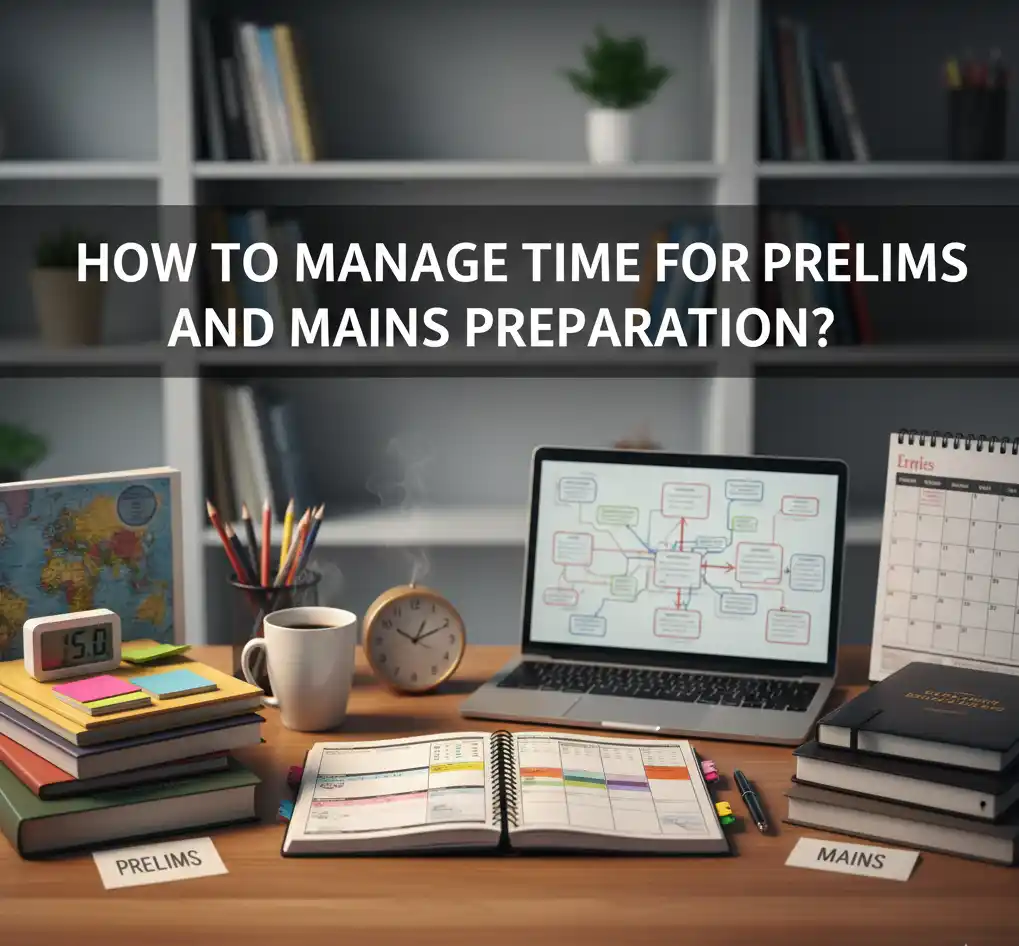
Managing your time effectively for preparation for Prelims and Mains can feel like a daunting
task, especially when gearing up for civil service exams like UPSC or MPSC. The syllabus is
extensive, the competition is fierce, and the exam unfolds in several stages—Prelims, Mains,
and the Interview.
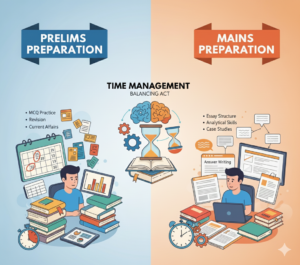
One of the most significant challenges candidates face is effectively managing their time while
preparing for both the Preliminary and Main examinations.
In this blog, we aim to share practical time management strategies that will help you develop a
balanced study plan and perform well in both stages of the examination.
Keep the momentum going.
Check out our next blog for practical insights every serious aspirant should know.Which Medium Is Best for UPSC/MPSC: English or Regional?
Why Is Time Management Crucial?
- The Preliminary Examination assess a candidate’s speed and accuracy through
multiple-choice questions.
- The Mains Examination evaluates writing skills , comprehension, and depth of subject
knowledge.
Altough both stages differ in format and focus, it is essential to prepare for them simultaneously,
especially during the initial months of preparation. Without a well structured plan, candidates
may waste valuable time, feel overwhelmed, or fall to achieve their examation objectives.
Understanding the Examination Structure
Before planning your study schedule, it’s essential to understand the fundamental structure of
the examination:
Prelims
- Objective in nature(MCQs)
- Consists of General Studies Paper I and CSAT
- Qualifying in nature not counted in the final merit list
Mains
- Comprises nine papers including two optional papers and one essay paper
- Descriptive in nature
- Carries Significant weight in the final selection
Recognizing these distinction will help you allocate your study time more effectively and
strategically.
Common Mistakes Aspirants Make
Aspirants should avoid the following common time-consuming pitfalls:
- Focusing exclusively on the Prelims while completely neglecting mains
- Postponing the practice of main examination answer writing
- Lacking a structured study timetable or following an inefficient daily routine
- Skipping regular revision or mock tests
- Spending excessive time on one subject while neglecting others
Time Management Strategy: Preparing for Prelims and Mains
Simultaneously
It is essential to adopt an integrated approach while preparing for both
stages of the examination.
1.Break Down Your Preparation into Phases
Phase 1: Before Preliminary Examination (6–8 months prior)
- Allocate approximately 70% of your study time to Prelims topics
- Reserve the remaining 30% for mains answer writing and optional subject preparation
Phase 2: After the Preliminary Examination (3–4 months leading up to the Main
Examination)
- Shift your focus entirely to Mains preparation, including essay, optional, General Studies
papers, and ethics
- Practice writing full-length answers and consider enrolling in a test series, if feasible.
2.Daily Time Table Tips
Below is a sample distribution of daily study hours:
- Activity Time
- General Studies Subjects 4–5 hours
- Optional Subject 2 hours
- Current Affairs 1 hour
- Mains Examination Answer Writing 1 hour (daily)
- Revision and Mock Pactice 1 hour
How to Prepare for the Preliminary and Main Examinations
Simultaneously
is entirely possible to prepare for both stages of the examination with a well-planned strategy.
The following tips can help streamline your preparation:
- Rely on common study materials for both exams, such as NCERTs, Laxmikanth, and
Spectrum.
- Maintain separate notes for the factual information required for the prelims and the
analysis for mains.
- Alternate your practice schedule by focusing on Prelims MCQs on one day and Mains
answer writing on the next .
- Continue preparation for the Essay and Ethics paper during the prelims phase.
- Develop a habit to weekly revison ,rather than limiting revision to a monthly schedule.
Post-Preliminary Examination: Making the Most of Your Time
Once the preliminary Examination is concluded, candidates typically have approximately
90–100 days to prepare for the Mains exam. Use this time wisely!
Focus Areas:
- Practice answer Write on a daily basis.
- Complete your Optional subject syllabus.
- Regularly Practice essay writing.
- Enroll in and attempt full-length test series.
- Aim to complete two to three rounds of revision.
Set weekly goals and monitor of your progress.
Tools and Techniques to Stay on Track
The following methods can help maintain focus and improve time efficiency:
✅ Use Study Planners or digital tools
- Platforms such as Google Calendar or Notion can assist in planning and scheduling
tasks.
- To-do list applications such as Todoist or Trello can help maintain organization and track
daily objectives.
✅ Use the Pomodoro Technique
- Study for 25 minutes, followed by a 5-minute break.
- This method helps maintain focus and mental freshness during study sessions.
✅ Minimize Distractions
- Keep mobile devices out of reach during study sessions.
- Utilize features such as “Focus Mode” or “Do Not Disturb” applications to limit
interruptions.
✅ Take Short Breaks and Get Plenty of Sleep
- Avoid studying continuously for extended periods of 10–12 hours
- Incorporate regular breaks, ensure sufficient rest, and eat well to enhance your focus
💡 Final Thoughts
Effective time management for Preliminary and Main Examination preparation is achievable by
remaining:
- Disciplined
- Smart
- Consistent
Candidates should not wait for the Preliminary Examination results to prepare for Main
Examination preparation. Starting early, maintaining a balance between both stages, and
sticking to your routine are essential. Success in competitive examination such as UPSC or
MPSC depends not only on hard work but also on working strategically and managing time
efficiently.
FAQs: How to Manage Time for Preliminary and Main
Examination Preparation
1.How should I divide my time between Preliminary and Main Examination preparation?
Ideally, follow a 70:30 ratio during the early months—70% focus on Prelims and 30% on Mains.
As the exam date approaches, shift to 90:10 for the last 2–3 months before the Prelims.
2.Can I prepare for Prelims and Mains together?
Yes. Many topics overlap. Studying both together saves time and helps build conceptual clarity.
Focus on NCERTs, core subjects, and current affairs that are common to both stages.
3.How many hours should I study daily for effective Prelims and Mains preparation?
Most aspirants aim for 6–8 hours of focused study. What matters more is consistency and
quality, not just long hours.
4.How do I make a daily study schedule for both Prelims and Mains?
Divide your day into blocks—morning for core subjects, afternoon for current affairs, evening for
Mains answer writing. Include breaks and a revision slot.
5.How often should I take mock tests?
Take one Prelims mock test every week in the early phase, and 2–3 per week during the final
months. Mains answer writing can be practiced 3–4 times a week.