In India, the qualifications needed to work as a psychologist can vary based on the area of specialization. If you’re looking to become a clinical psychologist, you’ll need to have an RCI-recognized MPhil in Clinical Psychology or something equivalent. For those interested in counselling, educational, or organizational psychology, a Master’s degree in Psychology is the basic requirement, although the licensing rules can differ.
What does “psychologist” legally mean in India?
A psychologist is a trained expert who evaluates, diagnoses, and helps with mental and behavioral issues using scientific techniques. In India, the title “Clinical Psychologist” is the only one that’s legally regulated by the Rehabilitation Council of India (RCI). Other roles in psychology don’t require a license at the moment, but they do need formal education.
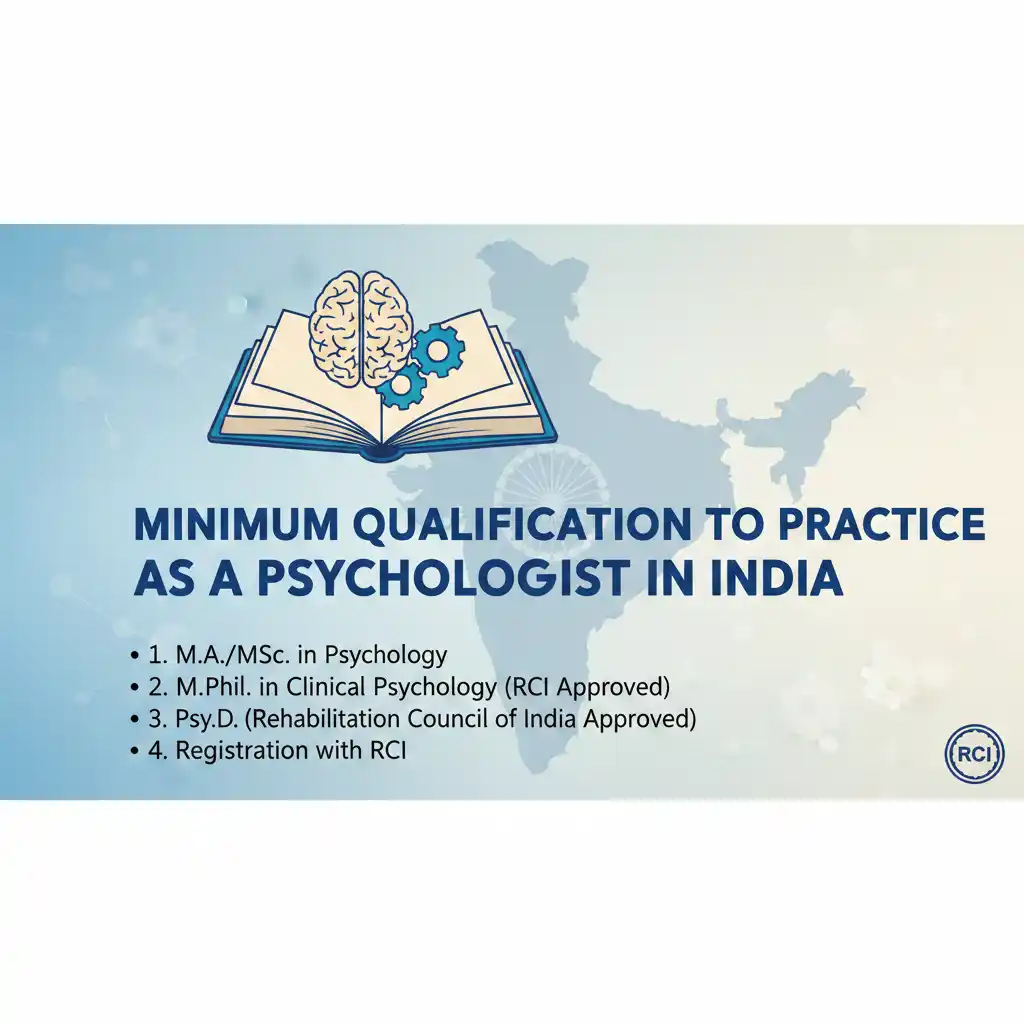
Minimum Qualification to Practice as a Psychologist in India

Quick Overview:
- Clinical Psychologist: MPhil (Clinical Psychology) – RCI recognized
- Counselling Psychologist: MA/MSc Psychology (Counselling specialization preferred)
- Educational/School Psychologist: MA/MSc Psychology + training
- Industrial/Organizational Psychologist: MA/MSc (I/O Psychology)
What is the minimum qualification for a Clinical Psychologist in India?
If you want to practice as a Clinical Psychologist legally, you’ll need to finish an RCI-recognized MPhil in Clinical Psychology or a similar professional doctorate that the RCI approves. Registration with the RCI is a must; without it, you won’t be able to engage in independent clinical practice, diagnosis, or psychotherapy.
Is a Master’s degree enough to become a psychologist in India?
If you’re looking to work in non-clinical roles such as counselling (non-medical), school psychology, research, HR, or wellness coaching, a Master’s degree (MA/MSc) in Psychology will do the trick. However, it’s important to remember that this degree doesn’t allow you to practice as a Clinical Psychologist or diagnose mental health issues.
Can you practice counselling with an MA/MSc in Psychology?
Yes! With an MA or MSc in Psychology, you can step into roles as a Counselling Psychologist or a mental health practitioner, working in private settings, NGOs, schools, or corporate wellness programs. Just a heads up, though—there’s currently no central licensing authority, so it’s really advisable to focus on ethical practices, seek supervision, and obtain recognized certifications.
Is RCI registration mandatory for all psychologists?
No, RCI registration is only required for Clinical Psychologists and other professions that fall under RCI’s regulations. On the other hand, counselling, educational, and organizational psychologists aren’t regulated by RCI. However, it’s worth noting that employers typically favor candidates who have completed structured training, internships, and hold professional memberships.
Psychologist vs Clinical Psychologist: Qualification Comparison
| Aspect | Psychologist (General) | Clinical Psychologist |
| Minimum Degree | MA/MSc Psychology | MPhil Clinical Psychology |
| Regulating Body | None (currently) | Rehabilitation Council of India (RCI) |
| Can Diagnose Mental Illness | ❌ No | ✅ Yes |
| Can Practice Therapy Independently | Limited | ✅ Yes |
| Legal Title Protection | ❌ No | ✅ Yes |
What are the recognized pathways after MA/MSc Psychology?
Thinking about your career options? Here are some common pathways to consider:
- MPhil in Clinical Psychology → Move into clinical practice (RCI)
- MPhil/PG Diploma in Counselling Psychology → Advance your skills with counselling
- PhD in Psychology → Explore opportunities in academia or research
- PG Certifications → Get certified in areas such as CBT, child psychology, rehabilitation, or HR
People Also Ask (PAA) – Quick Answers
1) Can BA Psychology graduates practice as psychologists?
No. A BA/BSc in Psychology is not sufficient for professional practice. You must complete at least an MA/MSc in Psychology to work in applied roles. Clinical practice requires additional RCI-recognized qualifications.
2) Is MPhil mandatory for all psychology careers in India?
No. MPhil is mandatory only for Clinical Psychology. Other psychology careers—counselling, HR, education, research—can be pursued with a Master’s degree, though advanced training improves employability and ethical practice.
3) Can psychologists prescribe medicines in India?
No. Psychologists cannot prescribe medication. Only psychiatrists (MBBS + MD Psychiatry) are authorized to prescribe drugs. Clinical psychologists focus on assessment, diagnosis, and psychotherapy, not pharmacological treatment.
4) Is there a license for counselling psychologists in India?
Currently, India has no central licensing authority for counselling psychologists. Practice is based on academic qualification, training, and ethics. Many professionals pursue international certifications or supervised practice to enhance credibility.
5) What is the minimum qualification to open a private psychology practice?
For clinical practice, an RCI license is mandatory. For counselling or wellness practice, an MA/MSc in Psychology with supervised experience is the minimum, though ethical guidelines and informed consent are essential.
6) Is Psychology a regulated profession in India?
Partially. Only Clinical Psychology is regulated by RCI. Other branches are unregulated but increasingly guided by professional bodies, ethical frameworks, and institutional standards.